In our fast-paced lives, the microwave oven has become an indispensable kitchen appliance, a beacon of convenience for quick meals and reheated leftovers. Many of us instinctively reach for plastic containers, drawn by their practicality and the reassuring “microwave-safe” label. But beneath this surface of ease lies a complex question: Is microwaving plastic truly safe for our health? While manufacturers strive to create safer products, understanding the nuances of plastic composition and chemical interactions is crucial. This guide will delve into the science behind microwaving plastic, dissect the meaning of labels like “BPA-free,” and equip you with the knowledge to make informed decisions for your well-being.
Understanding Microwave-Safe Labels: More Than Just Melting
When a plastic container proudly displays a “microwave-safe” label, it signifies a specific characteristic: the plastic’s ability to withstand the microwave’s heat without melting, warping, or degrading its structural integrity. This designation is primarily about the container’s durability, ensuring it won’t deform or break during heating. However, it’s a critical misconception to equate “microwave-safe” with “health-safe.” Research indicates that even plastics designed to endure microwave temperatures can still leach chemicals into your food, irrespective of maintaining their physical form. The internal heating process in a microwave, which vibrates water molecules in food to generate heat, also affects the plastic, potentially causing chemical bonds to break down and release substances.
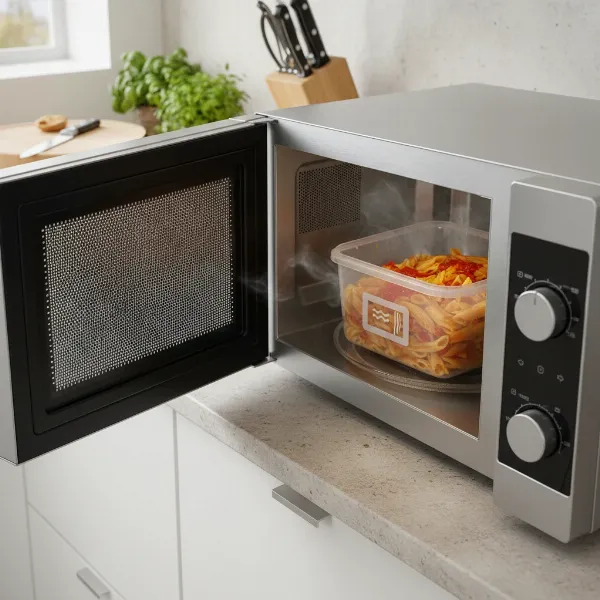 Plastic container with microwave-safe label in a microwave, illustrating potential chemical leaching into food.
The Chemical Concerns: BPA, BPS, BPF, and Phthalates
The primary apprehension surrounding microwaving plastic stems from the potential migration of harmful chemicals into food. The most widely recognized chemical is Bisphenol A (BPA), an endocrine disruptor historically used to harden plastics. BPA has been linked to various adverse health effects, including reproductive issues, thyroid diseases, certain cancers, and metabolic dysfunction.
Responding to public concern and regulatory pressures, many manufacturers introduced “BPA-free” plastics. While this seems like a positive step, it’s not a complete solution. Many BPA-free products substitute BPA with similar bisphenols like Bisphenol S (BPS) and Bisphenol F (BPF). Studies suggest that these alternatives may pose similar health risks, with some research indicating that over 70% of “BPA-free” products can still exhibit estrogenic activity, especially when heated. This means that simply seeing a “BPA-free” label does not guarantee the absence of concerning chemicals.
Beyond bisphenols, another significant group of chemicals found in plastics are phthalates. These are commonly added to plastics to increase their flexibility and durability. Like BPA, phthalates are also endocrine-disrupting chemicals associated with various health impacts, including infertility, neurobehavioral disorders, and metabolic issues.
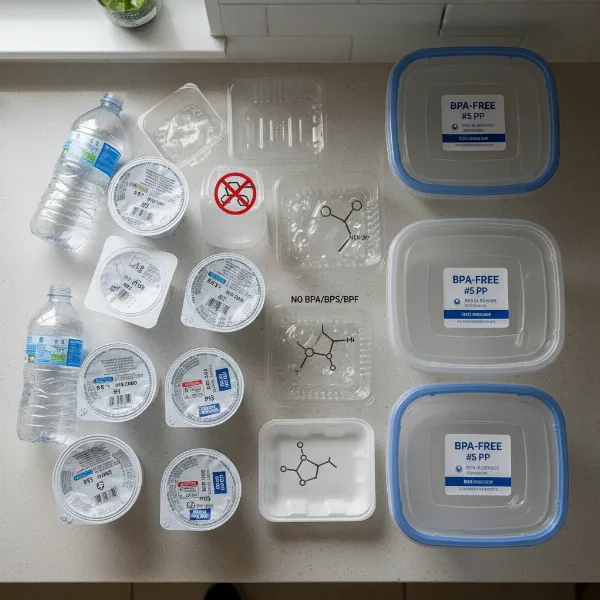 Assortment of plastic containers with recycling codes and warning symbols, highlighting concerns about BPA, BPS, BPF, and phthalates.
“In my 15 years of working with food packaging materials, I’ve seen firsthand how proper container selection impacts both safety and functionality. The recycling code on plastic containers isn’t just an environmental indicator—it’s a crucial safety guide.” – Paul Saunders, Packaging Expert and Founder of ePackage Supply.
It is important to note that the U.S. Food and Drug Administration (FDA), based on its own extensive research including a four-year review of over 300 scientific studies up to 2014, has consistently stated that BPA in food packaging is safe under typical use. However, the ongoing scientific debate and the prevalence of endocrine-disrupting chemicals in many plastic alternatives highlight the need for consumers to remain vigilant and consider precautionary measures.
Why Heat Matters: Amplifying Chemical Migration
The act of microwaving food in plastic significantly amplifies the migration of chemicals from the container into your meal. Heat destabilizes the plastic’s molecular structure, creating a semi-liquid state that facilitates the rapid transfer of these substances. This chemical migration is particularly pronounced under several conditions:
- High Temperatures: The hotter the food gets, the more chemicals can leach.
- Fatty Foods: Lipophilic (fat-loving) chemicals tend to migrate more readily into fatty foods. Reheating oily or greasy dishes in plastic can therefore increase exposure.
- Old or Scratched Containers: Any signs of wear, such as cracks, scratches, discoloration, or warping, indicate molecular breakdown. This degradation can lead to increased chemical leaching, even in plastics originally deemed microwave-safe. Manufacturers often recommend replacing such containers every 3-5 years.
Identifying Safe vs. Unsafe Plastics: Decoding Labels and Recycling Codes
Navigating the world of plastic containers requires understanding the various labels and symbols. While the “microwave-safe” symbol (often wavy lines) indicates the plastic’s resistance to melting, a more detailed understanding comes from the Resin Identification Code – the number inside the recycling triangle.
Here’s a breakdown of common plastic types and their microwave safety:
- Generally More Resistant (but not entirely risk-free):
- #2 HDPE (High-Density Polyethylene): Found in milk jugs and some sturdy containers. HDPE is more heat-tolerant (up to 266°F / 130°C) and considered relatively safer for microwaving compared to others.
- #5 PP (Polypropylene): Widely used for food containers, yogurt cups, and deli trays. PP is highly heat-resistant (up to 230°F / 110°C) and is the most common plastic labeled as microwave-safe and BPA-free. However, as noted earlier, even PP plastics advertised as BPA-free can contain alternative bisphenols and phthalates.
- Plastics to Avoid in the Microwave:
- #1 PET (Polyethylene Terephthalate): Often used for single-use water bottles and some disposable food packaging. PET has a low melting point and can release harmful substances when heated.
- #3 PVC (Polyvinyl Chloride): Found in cling wrap and some food packaging. PVC should be avoided due to the potential for chemical leaching, particularly phthalates.
- #6 PS (Polystyrene): Commonly known as Styrofoam, used for disposable plates, cups, and takeout containers. Polystyrene has a very low melting point and can deform and leach chemicals at moderate microwave temperatures.
- #7 Other (Often Polycarbonate): This category includes various plastics, including polycarbonates, which were historically made with BPA. Even newer #7 plastics, if not specifically certified otherwise, should be avoided as they may still contain problematic chemicals or alternatives.
Safer Alternatives to Plastic for Microwaving
Given the complexities and potential risks associated with microwaving plastic, opting for non-plastic alternatives is the safest choice.
- Glass Containers: Tempered glass is an excellent option. It is non-porous, does not leach chemicals, and is highly resistant to heat. Glass containers with BPA-free lids designed for microwave use are ideal for reheating and storage.
- Ceramic Dishes: Ceramic plates, bowls, and casseroles are also microwave-safe and chemically inert. They are durable and do not pose a risk of chemical migration.
- Silicone: Food-grade silicone, while technically a synthetic rubber, is generally considered safe for microwave use as it withstands high temperatures without leaching harmful chemicals. Ensure it’s 100% food-grade silicone.
- Paper Products: While paper towels and certain paper plates can be used for short periods, avoid paper products with wax coatings or plastic linings, as these can melt or leach chemicals. Also, do not use brown paper bags or newspapers.
Best Practices for Safer Microwaving
To minimize potential exposure to chemicals, follow these practical guidelines when using your microwave oven:
- Transfer Food: Always transfer food from plastic takeout containers or single-use plastic packaging to glass or ceramic dishes before microwaving.
- Avoid Plastic Wrap: Do not use plastic film or cling wrap to cover food in the microwave, even over non-plastic containers. The condensation that forms underneath can collect leached chemicals and drip directly into your food. Use a paper towel, a ceramic plate, or a specialized microwave-safe glass lid instead.
- Inspect Plastics: Regularly check any plastic containers you do use for signs of wear such as cracks, scratches, discoloration, or warping. Discard and replace them immediately if you notice any degradation, as this indicates molecular breakdown and increased leaching potential.
- Use Shorter Times and Lower Power: If you must microwave in plastic, use the lowest power setting and heat food for the shortest duration necessary. This reduces the plastic’s exposure to high temperatures.
- Leave a Gap: If using a plastic lid (e.g., on a glass container), leave a small gap for steam to escape to prevent pressure buildup and excessive heat.
Common Myths and Misconceptions
Despite increasing awareness, several myths about microwaving plastic persist:
- Myth 1: “BPA-free means it’s entirely safe.” As discussed, “BPA-free” plastics often contain substitute chemicals like BPS and BPF, which can also be endocrine disruptors.
- Myth 2: “The microwave-safe symbol guarantees health safety.” This symbol primarily indicates that the plastic won’t melt or warp, not that it won’t leach chemicals into your food.
- Myth 3: “Only hot food causes chemical leaching.” While heat significantly increases migration, some chemicals can leach even at room temperature, especially with acidic or fatty foods. Microwaving, however, dramatically accelerates this process.
Conclusion: Making Informed Choices for a Healthier Kitchen
The convenience of microwaving plastic is undeniable, but the underlying safety concerns regarding chemical migration are significant and complex. While regulatory bodies like the FDA deem BPA safe at typical exposure levels, a growing body of scientific research points to potential health risks associated with bisphenols and phthalates, even in “BPA-free” alternatives.
The ultimate safeguard for your health is informed decision-making. By understanding that “microwave-safe” labels primarily refer to a container’s structural integrity and that “BPA-free” doesn’t necessarily mean “chemical-free,” you can significantly reduce your exposure. Prioritizing glass or ceramic containers for microwaving is the most reliable way to ensure your food remains free from leached plastics and their associated chemicals. Empower yourself with this knowledge, audit your kitchen, and transition towards safer alternatives to create a healthier cooking and eating environment for you and your family. What changes will you make to ensure your microwave habits align with your health goals?
Frequently Asked Questions
What does the microwave-safe symbol mean?
|
Our Picks for the Best Microwave oven in 2026
As an Amazon Associate I earn from qualifying purchases.
|
||
| Num | Product | Action |
|---|---|---|
| 1 | COMFEE' Retro Small Microwave Oven With Compact Size, 9 Preset Menus, Position-Memory Turntable, Mute Function, Countertop, Perfect For Small Spaces, 0.7 Cu Ft/700W, Red, AM720C2RA-R |

|
| 2 | GASLAND 30 Inch Over-the-Range Microwave Oven, 1.7 Cu.Ft Over Stove Microwave, 1000W with 10 Power Levels, Sensor & One-Touch Cooking, 300 CFM Venting, LED Cooktop Light, Black Kitchen Microwave |
|
| 3 | BLACK+DECKER EM720CB7 Digital Microwave Oven with Turntable Push-Button Door, Child Safety Lock, 700W, Stainless Steel, 0.7 Cu.ft |
|
| 4 | COMFEE' Retro Small Microwave Oven With Compact Size, 9 Preset Menus, Position-Memory Turntable, Mute Function, Countertop Perfect For Spaces, 0.7 Cu Ft/700W, Cream, AM720C2RA-A |
|
| 5 | COMFEE' Retro Small Microwave Oven With Compact Size, 9 Preset Menus, Position-Memory Turntable, Mute Function, Countertop Microwave For Small Spaces, 0.7 Cu Ft/700W, Green, AM720C2RA-G |
|
| 6 | Chefman Countertop Microwave Oven 0.7 Cu. Ft., 700 Watts with 10 Power Levels, 6 Cooking Presets with One-Touch Express Cook, Eco Mode, Child Safety Lock, & Mute Button - Black |
|
| 7 | TOSHIBA EM131A5C-SS Countertop Microwave Ovens 1.2 Cu Ft with 12.4" Removable Turntable Smart Humidity Sensor, 12 Auto Menus Mute Function ECO Mode Easy Clean Interior, 1000W, Silver |
|
| 8 | TOSHIBA EM131A5C-BS Countertop Microwave Ovens 1.2 Cu Ft, 12.4" Removable Turntable Smart Humidity Sensor 12 Auto Menus Mute Function ECO Mode Easy Clean Interior Black Color 1000W |
|
| 9 | COMFEE' EM720CPL-PMB Countertop Microwave Oven with Sound On/Off, ECO Mode and Easy One-Touch Buttons, 0.7cu.ft, 700W, Black |
|
| 10 | COMFEE CMO-C20M1WH Retro Microwave with 11 power levels, Fast Multi-stage Cooking, Turntable Reset Function Kitchen Timer, Speedy Cooking, Weight/Time Defrost, Memory function, Children Lock, 700W |
|
The microwave-safe symbol, often depicted as wavy lines or a microwave icon, indicates that a plastic container is designed to withstand the heat of a microwave oven without melting or warping. However, it does not guarantee that the plastic will not leach chemicals into your food during the heating process.
Are all BPA-free plastics microwave safe?
No, not all BPA-free plastics are microwave safe. While BPA-free labels address one specific chemical, other factors like the plastic’s melting point and the presence of substitute chemicals (e.g., BPS, BPF) determine its overall safety for microwaving. For instance, BPA-free polystyrene (#6) or PET (#1) plastics are still generally unsafe for microwave use.
What plastics should I avoid in the microwave?
You should avoid microwaving plastics with recycling codes #1 (PET), #3 (PVC), #6 (Polystyrene/Styrofoam), and #7 (Other, especially polycarbonate). These plastics have lower melting points or are known to leach harmful chemicals more readily when heated, regardless of a “BPA-free” label.
Is microwaving food in plastic wrap safe?
It is generally not recommended to microwave food with plastic wrap. The heat from the food can cause chemicals from the plastic wrap to leach into your food, especially if the wrap touches the food directly. Additionally, condensation forming under the wrap can collect and drip chemicals into your meal.
How often should I replace microwave-safe plastic containers?
Even high-quality microwave-safe plastic containers should be replaced when they show signs of wear, such as cracks, scratches, discoloration, or warping. These indications suggest molecular breakdown, which can lead to increased chemical leaching. Most manufacturers advise replacing containers every 3-5 years with normal use.
What are the safest materials for microwaving?
The safest materials for microwaving food are glass and ceramic. These materials are non-porous, chemically inert, and do not leach harmful substances into your food, even when subjected to high temperatures. Food-grade silicone is another generally safe alternative.