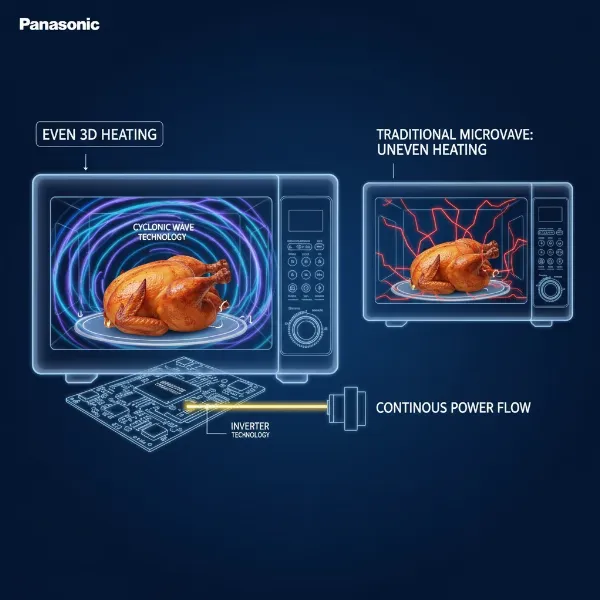
Few kitchen appliances offer the convenience of a microwave, effortlessly transforming leftovers into a warm meal or rapidly preparing a snack. So, when your trusty microwave stops heating, yet still hums, spins, and lights up, it can bring your kitchen routine to a frustrating halt. Understanding why your microwave isn’t heating can help you determine whether it’s a simple fix, or if it’s time to call in a professional.
This comprehensive guide will walk you through the inner workings of your microwave, diagnose the most frequent culprits behind heating failures, offer safe troubleshooting steps, and advise when it’s critical to seek expert help.
Understanding Your Microwave: How It Heats Food
Before diving into troubleshooting, it’s helpful to grasp the basic principle of how your microwave works. At its core, a microwave oven employs a component called a magnetron. This vacuum tube generates high-frequency electromagnetic waves, which are then channeled into the oven’s cooking cavity. These microwaves cause water molecules within your food to vibrate rapidly, generating friction and, consequently, heat. When this intricate process is interrupted, your food remains stubbornly cold.
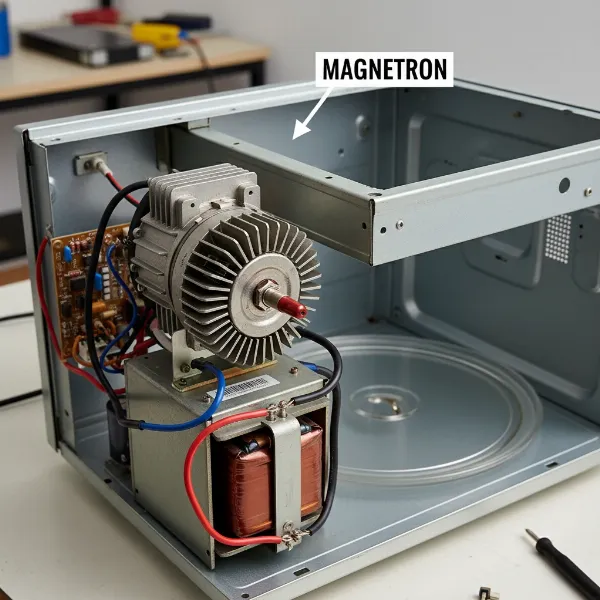 internal view of a microwave oven showing the magnetron and waveguide system
The Silent Problem: Why Your Microwave Isn’t Heating Up
It’s a common scenario: you place food in the microwave, set the timer, press start, and everything seems normal – the light comes on, the turntable spins, and you hear the familiar hum. Yet, after the cycle completes, your food is still cold. This indicates that while the control functions are operational, the essential heating mechanism has failed.
Common Culprits: Diagnosing Your Microwave’s Heating Failure
Several components contribute to your microwave’s heating capabilities, and a fault in any one of them can lead to a lack of heat. Pinpointing the exact issue often requires a systematic approach.
The Door Switch Assembly
Your microwave is equipped with a crucial safety feature: multiple interlock switches located within the door latch assembly. Typically, there are two or three of these switches, and they ensure the microwave cannot generate microwaves unless the door is securely closed and latched. If even one of these switches malfunctions, the microwave’s heating function will be disabled as a safety precaution.
Symptoms of a Faulty Door Switch:
- The microwave fails to start entirely when the door is closed.
- The interior light remains on even when the door is shut, or fails to come on when the door is opened.
- You may notice the microwave tripping the circuit breaker when you attempt to start it.
- There’s no audible “click” when you gently press the door closed.
Potential Causes and Fixes:
- Mechanical wear: Over time, the plastic latches or switches can wear out.
- Misalignment: The door or its latches might be slightly misaligned, preventing proper engagement with the switches.
- Dirt or debris: Accumulated grime can obstruct the switch mechanism.
- Damaged switch: The switch itself may be physically broken or have corroded contacts.
|
Our Picks for the Best Microwave oven in 2026
As an Amazon Associate I earn from qualifying purchases.
|
||
| Num | Product | Action |
|---|---|---|
| 1 | COMFEE' Retro Small Microwave Oven With Compact Size, 9 Preset Menus, Position-Memory Turntable, Mute Function, Countertop Perfect For Spaces, 0.7 Cu Ft/700W, Cream, AM720C2RA-A |

|
| 2 | COMFEE' EM720CPL-PMB Countertop Microwave Oven with Sound On/Off, ECO Mode and Easy One-Touch Buttons, 0.7cu.ft, 700W, Black |
|
| 3 | BLACK+DECKER EM720CB7 Digital Microwave Oven with Turntable Push-Button Door, Child Safety Lock, 700W, Stainless Steel, 0.7 Cu.ft |
|
| 4 | TOSHIBA EM131A5C-SS Countertop Microwave Ovens 1.2 Cu Ft with 12.4" Removable Turntable Smart Humidity Sensor, 12 Auto Menus Mute Function ECO Mode Easy Clean Interior, 1000W, Silver |
|
| 5 | Chefman Countertop Microwave Oven 0.7 Cu. Ft., 700 Watts with 10 Power Levels, 6 Cooking Presets with One-Touch Express Cook, Eco Mode, Child Safety Lock, & Mute Button - Black |
|
| 6 | COMFEE' Retro Small Microwave Oven With Compact Size, 9 Preset Menus, Position-Memory Turntable, Mute Function, Countertop, Perfect For Small Spaces, 0.7 Cu Ft/700W, Red, AM720C2RA-R |
|
| 7 | TOSHIBA EM131A5C-BS Countertop Microwave Ovens 1.2 Cu Ft, 12.4" Removable Turntable Smart Humidity Sensor 12 Auto Menus Mute Function ECO Mode Easy Clean Interior Black Color 1000W |
|
| 8 | COMFEE CMO-C20M1WH Retro Microwave with 11 power levels, Fast Multi-stage Cooking, Turntable Reset Function Kitchen Timer, Speedy Cooking, Weight/Time Defrost, Memory function, Children Lock, 700W |
|
| 9 | COMFEE' Retro Small Microwave Oven With Compact Size, 9 Preset Menus, Position-Memory Turntable, Mute Function, Countertop Microwave For Small Spaces, 0.7 Cu Ft/700W, Green, AM720C2RA-G |
|
| 10 | GASLAND 30 Inch Over-the-Range Microwave Oven, 1.7 Cu.Ft Over Stove Microwave, 1000W with 10 Power Levels, Sensor & One-Touch Cooking, 300 CFM Venting, LED Cooktop Light, Black Kitchen Microwave |
|
While adjusting the door or cleaning the latch area can sometimes resolve minor issues, replacing a faulty door switch often requires disassembling the microwave. Due to the high-voltage components inside, this is generally best left to a professional.
The Magnetron: The Heart of the Heating System
The magnetron is arguably the most critical component for heating. It’s responsible for converting electrical energy into the microwaves that cook your food. When the magnetron fails, your microwave simply won’t heat.
Signs of a Failing Magnetron:
- No heat: The most obvious symptom – the microwave runs, but food stays cold.
- Inconsistent heating: Food heats unevenly, with some parts hot and others cold.
- Unusual noises: A healthy microwave hums gently. A failing magnetron might produce loud buzzing, grinding, clicking, or even a high-pitched squealing sound.
- Sparking inside the microwave: This is a serious indicator and requires immediate attention.
- Burning smells: An acrid or electrical burning smell (not from burnt food) often points to an overheating or shorting magnetron.
- Blown fuse: A magnetron failure can sometimes cause the main fuse or high-voltage fuse to blow.
“The magnetron is a highly sensitive component; any unusual noise, sparking, or burning odor should be a clear signal to stop use and seek professional inspection immediately. Safety is paramount when dealing with high-voltage microwave parts.” – John Smith, Senior Appliance Technician
A magnetron typically lasts 6-10 years. Unfortunately, magnetrons are not usually repairable and must be replaced if faulty. This is a complex and potentially dangerous repair due to the extremely high voltages involved.
The High-Voltage Diode and Capacitor
These two components are part of the high-voltage circuit, which works in conjunction with the high-voltage transformer to supply the magnetron with the immense power it needs (around 4000V). A failure in either the diode or the capacitor will disrupt this power supply, preventing the magnetron from operating.
The High-Voltage Capacitor
The capacitor stores electrical energy and releases it to the magnetron.
Symptoms of a Failing Capacitor:
- The microwave runs, but produces no heat.
- You might hear an unusual loud humming noise from the microwave.
- The microwave trips the circuit breaker.
- A blown high-voltage fuse is often associated with a failing capacitor.
Safety Warning: Microwave capacitors can store a lethal electrical charge even after the appliance is unplugged. They must be safely discharged by a trained professional before any internal work is attempted. Attempting to test or replace a capacitor without proper knowledge and tools can be fatal.
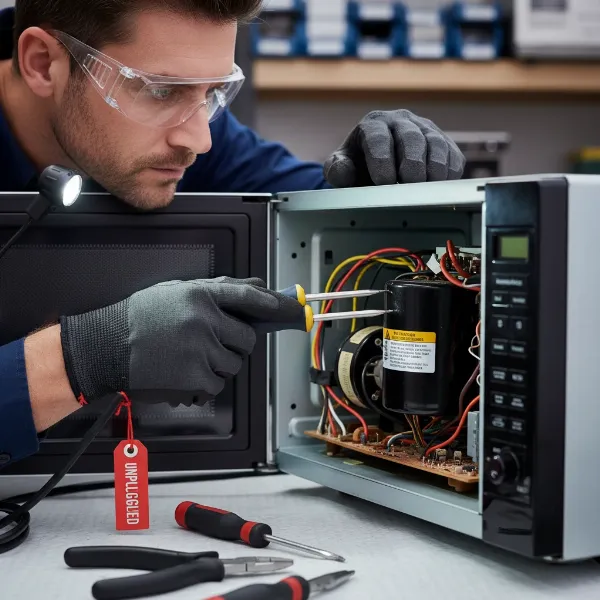 appliance technician safely working on a microwave's high-voltage components with safety gear
The High-Voltage Diode
The diode converts the alternating current (AC) from the transformer into the direct current (DC) required by the magnetron.
Symptoms of a Failing Diode:
- No heat is produced.
- A shorted diode often results in a very loud humming noise from the high-voltage transformer, but no heat.
- An open diode can result in little to no heat with an absence of the loud humming noise.
- Physical signs such as burning smells, cracks, blisters, or splits on the diode itself.
Like the capacitor, replacing a high-voltage diode requires working with extremely dangerous electrical components. Professional repair is highly recommended.
The Thermal Cutout/Fuse
Microwaves incorporate one or more thermal cutouts (also known as thermal fuses or thermal protectors) as critical safety devices. These components are designed to automatically cut off power to the microwave if the internal temperature exceeds a safe limit, preventing overheating and potential fire hazards.
Symptoms of a Blown Thermal Cutout/Fuse:
- The microwave is completely dead – no lights, no display, no fan, no heat.
- Alternatively, the microwave may turn on, but will not heat and may eventually shut down due to a secondary overheating issue.
If a thermal cutout blows, it usually indicates that the microwave has overheated, often due to a fault elsewhere in the system (e.g., a failing magnetron or poor ventilation). While the fuse itself is a relatively inexpensive part, simply replacing it without addressing the underlying cause of overheating will likely lead to repeated failures. Most thermal fuses are “one-shot” devices and cannot be reset, requiring replacement.
The High-Voltage Transformer
The high-voltage transformer boosts the standard household voltage to the extremely high levels needed by the magnetron. If this component fails, the magnetron won’t receive adequate power to generate microwaves.
Symptoms of a Failing Transformer:
- The microwave does not heat food.
- You might notice a loud buzzing noise.
- A distinct burning smell or visible signs of arcing can indicate transformer failure.
Transformer replacement is a complex and hazardous repair, requiring professional expertise.
Control Panel or Main Control Board Issues
While less common for direct heating failure where the appliance still “runs” but doesn’t heat, issues with the control panel or main control board can sometimes mimic other problems. These boards manage all microwave functions, including the heating cycle.
Symptoms:
- Error codes displayed on the screen that prevent heating.
- The microwave seems to operate but specific functions (like heating) are non-responsive, even if the internal components appear fine.
- Intermittent heating or erratic behavior.
Diagnosing a control board issue can be challenging and often involves ruling out all other component failures first. Replacement of these boards can be costly, and professional assessment is usually advisable.
Simple Troubleshooting Steps You Can Safely Take
Before considering internal component repairs, try these simple, safe troubleshooting steps:
- Check the Power Supply: Ensure your microwave is firmly plugged into a grounded, operational outlet. If it’s completely dead, check your home’s circuit breaker box to see if the breaker powering the microwave has tripped. Reset it if necessary.
- Verify Door Closure: Make sure the microwave door is fully closed and latched. For new microwaves, remove any shipping spacers or packaging that might prevent the door from securing completely.
- Examine Control Settings:
- Control Lock or Demo Mode: Many microwaves have these features. Control Lock prevents accidental operation, while Demo Mode runs the fan and light but disables heating to showcase functionality. Check your owner’s manual for how to deactivate these modes if they are engaged. Common indicators include “LOC” or “L” on the display.
- Low Power Level: Ensure the power level is set appropriately for the food you’re trying to heat. A very low power setting might only warm food slowly, leading you to believe it’s not heating at all.
- Delay Start: Confirm that a “Delay Start” function isn’t activated, which would postpone the cooking cycle.
- Clean the Interior: While not directly related to heating, a build-up of food debris or grease can sometimes cause arcing or affect sensor performance. Give your microwave a thorough clean.
When to Call a Professional: Safety First
While some basic checks can be done by a homeowner, any internal repair of a microwave oven should be handled by a qualified technician. This is not a recommendation; it is a critical safety warning.
Microwave ovens contain a high-voltage capacitor that can store a lethal electrical charge (up to 4000 volts) for an extended period, even after the unit is unplugged. Contact with this component can be fatal. Beryllium oxide, a toxic substance, can also be present in the magnetron’s ceramic insulation.
Call a professional if you encounter:
- Any issues related to the magnetron, high-voltage diode, capacitor, or transformer.
- Persistent burning smells or sparking.
- The microwave trips the circuit breaker repeatedly.
- You’re uncomfortable or unsure about any troubleshooting step beyond basic external checks.
A certified appliance repair technician has the specialized tools, knowledge, and safety training required to safely diagnose and repair these dangerous components.
Maintaining Your Microwave to Prevent Future Issues
Regular maintenance can extend your microwave’s lifespan and help prevent heating problems:
- Keep it Clean: Regularly wipe down the interior to prevent food splatters from hardening or causing issues.
- Use Proper Cookware: Always use microwave-safe dishes and avoid metal, which can cause dangerous arcing and damage components.
- Avoid Running Empty: Operating an empty microwave can damage the magnetron. Always have food or a cup of water inside when running it.
- Close the Door Gently: Repeatedly slamming the door can damage the door latch and its safety switches over time.
- Ensure Proper Ventilation: Make sure your microwave’s ventilation isn’t blocked, as adequate airflow prevents overheating of internal components.
Conclusion: Getting Your Microwave Back in Action
A microwave that isn’t heating can be a significant inconvenience, but understanding the common causes—from simple user settings to complex component failures like a faulty magnetron, high-voltage diode, or capacitor—empowers you to address the issue effectively. While basic checks can often resolve minor operational hiccups, it’s crucial to prioritize safety. Always remember the extreme electrical hazards associated with internal microwave components.
When in doubt, or if the problem points to an internal electrical component, the safest and most reliable course of action is to contact a qualified appliance repair professional. They possess the expertise and tools to diagnose and fix the problem safely, ensuring your microwave returns to its full heating potential without risking your well-being. Don’t let a cold meal be the last straw – professional help is often just a call away.
Frequently Asked Questions
Can I fix a microwave that’s not heating myself?
While you can troubleshoot simple issues like power supply, door closure, or incorrect settings, internal repairs involving components like the magnetron, capacitor, or high-voltage diode are extremely dangerous due to lethal stored electrical charges. These repairs should only be performed by a qualified technician.
How long do microwave magnetrons typically last?
On average, a microwave magnetron can last between 6 to 10 years with regular use. Factors like frequency of use, power surges, and proper ventilation can influence its lifespan.
Why does my microwave hum loudly but not heat food?
A loud humming noise, coupled with no heating, often indicates a problem with the high-voltage circuit, specifically a shorted high-voltage diode or a failing high-voltage transformer. This is a serious issue that requires professional repair.
What is “Control Lock” mode, and how does it affect heating?
Control Lock mode is a safety feature that disables the microwave’s functions, including heating, to prevent accidental operation or tampering. If enabled, your microwave might appear to be on but won’t start cooking. Refer to your owner’s manual to learn how to deactivate this mode.
Is it safe to use a microwave if it’s sparking inside?
No, it is absolutely not safe to use a microwave that is sparking inside. This is a strong indicator of a serious internal fault, potentially with the magnetron or waveguide, and could pose a fire hazard. Unplug the microwave immediately and do not use it until it has been inspected and repaired by a professional.