Many baking recipes call for “softened butter,” a seemingly simple instruction that often frustrates home bakers. Achieving that perfect consistency—soft enough to cream smoothly but not at all melted—can feel like a high-wire act, especially when you’re short on time and resort to the microwave. Fear not, for this guide will transform you into a butter-softening maestro, ensuring your cookies are chewy, your cakes are fluffy, and your frostings are flawlessly smooth, all with the help of your microwave oven.
What is Softened Butter and Why is it Essential?
Softened butter refers to butter that has come to a specific temperature, typically between 65°F and 68°F (18°C-20°C). At this temperature, butter is pliable enough to leave an indentation when gently pressed with a finger, yet it still holds its shape and feels cool to the touch, not greasy or oily.
This specific consistency is paramount in baking, particularly for methods like “creaming.” When softened butter is beaten with sugar, its tiny air pockets trap air bubbles. These air bubbles expand during baking, contributing to the light, airy, and fluffy texture of cakes, cookies, and other baked goods. If butter is too cold, it won’t incorporate well with sugar and won’t trap enough air, leading to dense results. Conversely, if butter is too warm or melted, it loses its ability to hold air, which can cause cookies to spread excessively or cakes to fall flat. Understanding this delicate balance is the first step to mastering your baked creations.
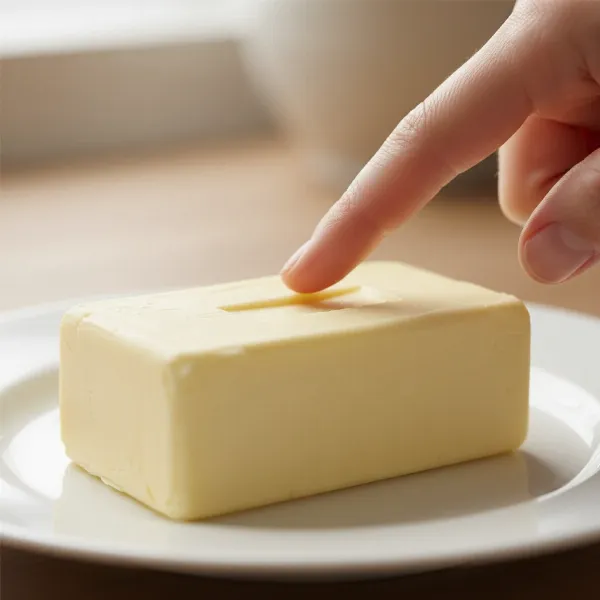 A finger gently pressing into a stick of perfectly softened butter, leaving a slight indentation.
Common Microwave Oven Types and How They Affect Butter Softening
While most households have a microwave oven, not all operate identically, and understanding your appliance can significantly impact your butter-softening success. The primary difference relevant to this task lies in how microwaves regulate power.
Traditional microwave ovens often use a magnetron that cycles on and off rapidly to achieve lower power settings, meaning the butter receives full power intermittently. This can lead to uneven heating and a higher risk of melting if not carefully monitored. In contrast, newer inverter microwaves provide a continuous, consistent stream of power at lower settings. This allows for more precise and gentle heating, making it somewhat easier to soften butter without accidentally melting it. Regardless of your microwave’s type, its wattage also plays a role; higher wattage microwaves will heat faster, requiring shorter intervals and extra vigilance. Knowing your microwave’s characteristics will help you adjust timings accordingly for optimal results.
Top Methods to Soften Butter in a Microwave Without Melting It
Achieving perfectly softened butter in a microwave is a skill, and with these proven techniques, you’ll avoid the dreaded melted edges and hard centers.
Method 1: The Warm Microwave (Indirect Heat/Steam Bath)
|
Our Picks for the Best Microwave oven in 2026
As an Amazon Associate I earn from qualifying purchases.
|
||
| Num | Product | Action |
|---|---|---|
| 1 | BLACK+DECKER EM720CB7 Digital Microwave Oven with Turntable Push-Button Door, Child Safety Lock, 700W, Stainless Steel, 0.7 Cu.ft |

|
| 2 | TOSHIBA EM131A5C-BS Countertop Microwave Ovens 1.2 Cu Ft, 12.4" Removable Turntable Smart Humidity Sensor 12 Auto Menus Mute Function ECO Mode Easy Clean Interior Black Color 1000W |
|
| 3 | COMFEE' Retro Small Microwave Oven With Compact Size, 9 Preset Menus, Position-Memory Turntable, Mute Function, Countertop, Perfect For Small Spaces, 0.7 Cu Ft/700W, Red, AM720C2RA-R |
|
| 4 | TOSHIBA EM131A5C-SS Countertop Microwave Ovens 1.2 Cu Ft with 12.4" Removable Turntable Smart Humidity Sensor, 12 Auto Menus Mute Function ECO Mode Easy Clean Interior, 1000W, Silver |
|
| 5 | COMFEE' Retro Small Microwave Oven With Compact Size, 9 Preset Menus, Position-Memory Turntable, Mute Function, Countertop Perfect For Spaces, 0.7 Cu Ft/700W, Cream, AM720C2RA-A |
|
| 6 | COMFEE' EM720CPL-PMB Countertop Microwave Oven with Sound On/Off, ECO Mode and Easy One-Touch Buttons, 0.7cu.ft, 700W, Black |
|
| 7 | Chefman Countertop Microwave Oven 0.7 Cu. Ft., 700 Watts with 10 Power Levels, 6 Cooking Presets with One-Touch Express Cook, Eco Mode, Child Safety Lock, & Mute Button - Black |
|
| 8 | COMFEE CMO-C20M1WH Retro Microwave with 11 power levels, Fast Multi-stage Cooking, Turntable Reset Function Kitchen Timer, Speedy Cooking, Weight/Time Defrost, Memory function, Children Lock, 700W |
|
| 9 | GASLAND 30 Inch Over-the-Range Microwave Oven, 1.7 Cu.Ft Over Stove Microwave, 1000W with 10 Power Levels, Sensor & One-Touch Cooking, 300 CFM Venting, LED Cooktop Light, Black Kitchen Microwave |
|
| 10 | COMFEE' Retro Small Microwave Oven With Compact Size, 9 Preset Menus, Position-Memory Turntable, Mute Function, Countertop Microwave For Small Spaces, 0.7 Cu Ft/700W, Green, AM720C2RA-G |
|
This ingenious method leverages residual heat to gently bring your butter to the ideal temperature, minimizing the risk of direct microwaving mishaps. It’s perfect for when you have a little more time, typically around 5-10 minutes.
Steps:
- Heat Water: Pour 1-2 cups of water into a microwave-safe cup or bowl.
- Microwave Water: Heat the water on high for 2-3 minutes, until it’s very hot and steaming.
- Remove Water: Carefully remove the hot water from the microwave. Be cautious of steam.
- Place Butter: Immediately place your unwrapped stick (or preferably, sliced) of butter onto a microwave-safe plate inside the now-empty, warm microwave.
- Seal It: Quickly close the microwave door to trap the radiant heat and steam inside.
- Wait: Let the butter sit in the warm environment for 5 to 10 minutes.
- Check: After the time, test the butter by gently pressing it with a finger. It should yield an indentation but still feel cool.
This method works by creating a mini “sauna” for your butter, allowing it to gradually warm up without direct exposure to microwave energy, which can cause melting.
Method 2: Low Power, Short Bursts (Direct Microwaving)
When time is of the essence, direct microwaving is the fastest route, but it requires precision and vigilance. The key is using low power settings and extremely short intervals.
Steps:
- Prepare Butter: Unwrap your stick of butter and place it on a microwave-safe plate. For best results, slice the stick into 1-inch pieces or cube it into quarter-inch pieces to increase surface area and promote even heating.
- Set Power: Adjust your microwave to a very low power setting. This could be 10%, 20%, 30%, or even the “Defrost” setting, which typically uses a lower power level.
- Microwave in Bursts: Microwave the butter for a very short duration—think 5 to 7 seconds.
- Check and Rotate: Immediately after the burst, check the butter’s softness. If not ready, rotate the butter (or flip it if standing vertically) to expose different sides to the microwave energy.
- Repeat: Repeat steps 3 and 4, continuing with 5-7 second bursts until the desired softness is achieved. This usually takes a total of 15-30 seconds, depending on your microwave and the butter’s initial temperature.
Monitoring constantly is crucial. Butter can transition from perfectly soft to partially melted in mere seconds. The goal is to achieve an even softness throughout, with no greasy spots.
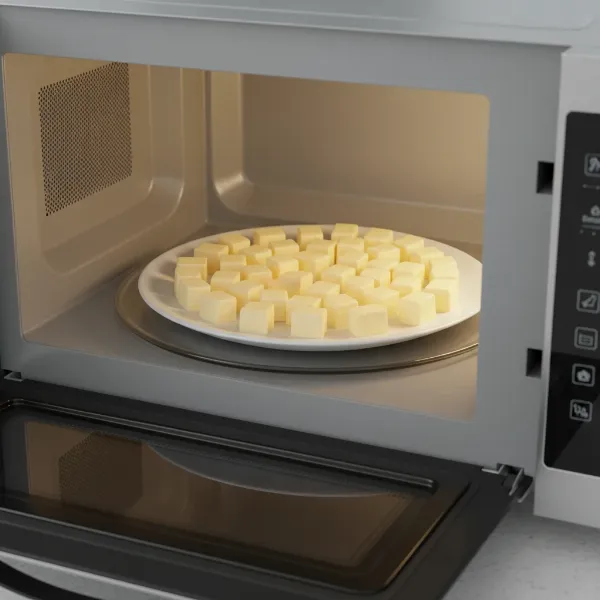 Small, uniform cubes of butter spread on a microwave-safe plate, ready for softening.
Method 3: Cubing for Even Softening
While not a standalone method, cubing your butter is an excellent enhancement for any microwave-softening technique, particularly when using direct microwaving.
How to Cube Butter:
Simply take your cold stick of butter and cut it into small, uniform cubes, about ¼ to ½ inch in size. Spread these cubes out on a microwave-safe plate.
Benefits:
- Increased Surface Area: Smaller pieces mean more surface area is exposed, allowing the butter to absorb heat more evenly and quickly.
- Faster Softening: The butter will reach the desired temperature in less time.
- Reduced Melting Risk: Even if one part gets slightly warmer, the smaller pieces are less likely to melt into a puddle before the rest of the butter softens.
A Comparative Look at Microwave Butter Softening Techniques
Choosing the right method depends on how much time you have and your comfort level with direct microwaving. Here’s a comparison to help you decide:
| Feature | The Warm Microwave (Indirect Heat) | Low Power, Short Bursts (Direct Microwaving) |
|---|---|---|
| Ease of Use | Simple, very low risk | Requires careful monitoring and quick action |
| Time Taken | 5-10 minutes | 15-30 seconds (total microwaving time) |
| Risk of Melting | Very Low | Moderate to High (if not careful) |
| Evenness of Softening | Excellent (especially with sliced/cubed butter) | Good (with rotation/cubing, but can be uneven) |
| Best For | When you have a few extra minutes, guaranteed results | When you need butter softened immediately |
Essential Tips for Perfect Microwave Butter Softening
To ensure consistent success with your microwave, keep these expert tips in mind:
- Always Start with Less Time: It’s easier to add more time than to salvage melted butter. Begin with the shortest recommended interval and add as needed.
- Slice or Cube Butter: This significantly increases the surface area, allowing for faster and more even softening. A whole stick can cook unevenly, leading to melted edges and a cold core.
- Use a Microwave-Safe Plate: While seemingly obvious, ensure your plate is indeed microwave-safe to avoid any issues.
- Know Your Microwave’s Wattage: Higher wattage microwaves heat faster, so adjust your timing downwards. If your microwave is particularly powerful, you might need even shorter bursts.
- Monitor Constantly: Never walk away from butter in the microwave. Its state can change rapidly.
- How to Check for Perfect Softness: Gently press a finger into the butter. It should leave an indentation without your finger sinking all the way through, and the butter should still feel cool, not greasy.
Troubleshooting: What to Do If Your Butter Melts
Even with the best techniques, accidents happen. If your butter accidentally melts in the microwave, don’t despair!
First, assess how much it has melted. If it’s just a little liquid at the edges, you might be able to stir it vigorously and let it sit for a minute or two to firm up slightly. If it’s completely liquid, it likely won’t perform correctly in recipes requiring creaming, as its structure for trapping air has been compromised.
However, melted butter is still perfectly usable in many other applications! Consider using it for recipes that specifically call for melted butter, such as:
- Pie crusts
- Brownie recipes
- Certain types of cookies (e.g., some shortbreads or cookies designed to spread)
- Sauces (like hollandaise or beurre blanc)
- To brush on toast or vegetables
You can also try to re-chill melted butter in the refrigerator or freezer until it solidifies. While it will become solid again, its texture might be grainier and it may not cream as effectively as butter that has only been softened to room temperature. Therefore, it’s generally best to repurpose it if possible.
Safety Notes for Microwave Oven Use
While convenient, it’s always wise to observe general safety guidelines when using a microwave, especially when dealing with food.
- No Metal: Never place metal containers or foil in the microwave, as this can cause arcing and damage your appliance.
- Proper Containers: Always use microwave-safe dishes, glass, or ceramic.
- Avoid Overheating: While we’re trying to avoid melting butter, be mindful of any other items you might microwave. Overheating certain foods or liquids can lead to burns.
- Supervise Children: Ensure children are supervised when operating a microwave oven.
By following these simple safety precautions, you can use your microwave oven confidently for all your cooking and baking needs.
Conclusion: Master the Art of Softening Butter
Softening butter to perfection in a microwave oven is a valuable skill that can significantly elevate your baking. By understanding the importance of proper butter consistency, employing indirect heat methods, or mastering low-power, short-burst direct microwaving, you can reliably achieve that ideal pliability every time. Remember to always start with less time, consider cubing your butter, and keep a watchful eye on your appliance.
With these techniques in your baking arsenal, you’ll no longer dread the “softened butter” instruction. Instead, you’ll confidently prepare your ingredients, ensuring your culinary creations are consistently light, airy, and delicious. What’s your go-to recipe where perfectly softened butter makes all the difference?
Frequently Asked Questions
How long does it take to soften butter in a microwave?
The time varies greatly depending on your microwave’s wattage and the method used. Using the warm microwave method, it takes about 5-10 minutes. With direct microwaving on a low power setting and in short bursts (e.g., 5-7 seconds), the total microwaving time usually ranges from 15-30 seconds. Always start with less time and add as needed.
Can I use the defrost setting to soften butter?
Yes, the defrost setting is often an excellent option for softening butter. It typically operates at a lower power level, providing more gentle and even heating compared to full power. Place unwrapped butter on a plate and use short intervals, checking frequently, as defrost settings can vary.
What is the ideal temperature for softened butter?
The ideal temperature for softened butter is generally between 65°F and 68°F (18°C-20°C). At this temperature, the butter is pliable enough to be easily indented with a finger but still firm enough to hold its shape and feel cool, not oily or greasy.
Why does my butter always melt in the microwave?
Butter often melts in the microwave due to using too high a power setting, microwaving for too long, or not rotating/flipping the butter for even heating. Microwaves heat unevenly, creating hot spots. To avoid melting, use low power settings, very short bursts, and consider cutting the butter into smaller pieces.
Can I soften butter in its wrapper in the microwave?
It’s generally not recommended to soften butter in its wrapper in the microwave. While some wrappers are microwave-safe, leaving it on can trap heat unevenly and make it harder to monitor the butter’s softness, increasing the risk of melting. Always unwrap the butter and place it on a microwave-safe plate.