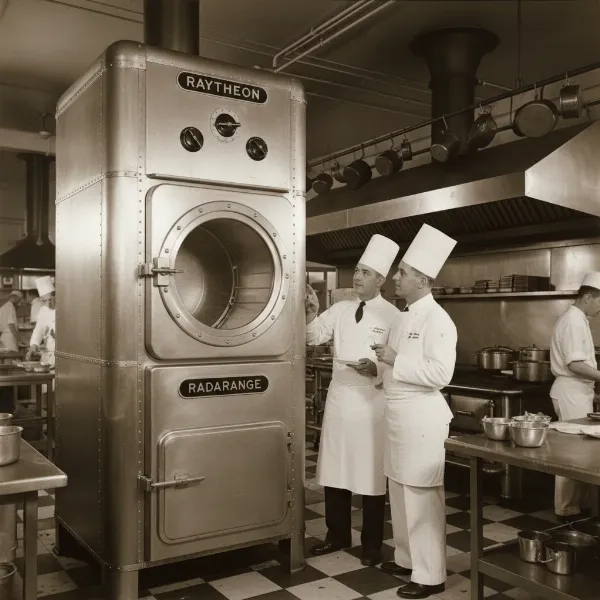
The microwave oven has evolved from a simple reheating tool into a versatile kitchen workhorse. With a dizzying array of models on the market, understanding the core differences between solo, grill, and convection microwaves is key to selecting the perfect appliance for your culinary adventures. Whether you’re a quick-meal enthusiast, a grilling aficionado, or a passionate home baker, there’s a microwave designed to meet your needs. Let’s delve into the world of microwave types to help you make an informed decision and elevate your cooking game.
What is a Microwave Oven?
A microwave oven is a kitchen appliance that heats food by exposing it to electromagnetic radiation in the microwave frequency range. This process causes water molecules within the food to vibrate rapidly, generating heat and cooking the food from the inside out. The concept of microwave heating dates back to the mid-20th century, with the first commercial microwave oven introduced in 1947, and it has since become an indispensable part of modern kitchens globally, prized for its speed and convenience.
Popular Microwave Oven Types Explained
Understanding the distinct functionalities of each microwave type is crucial for smart appliance shopping. While they all share the fundamental ability to heat food, their additional features cater to vastly different cooking styles.
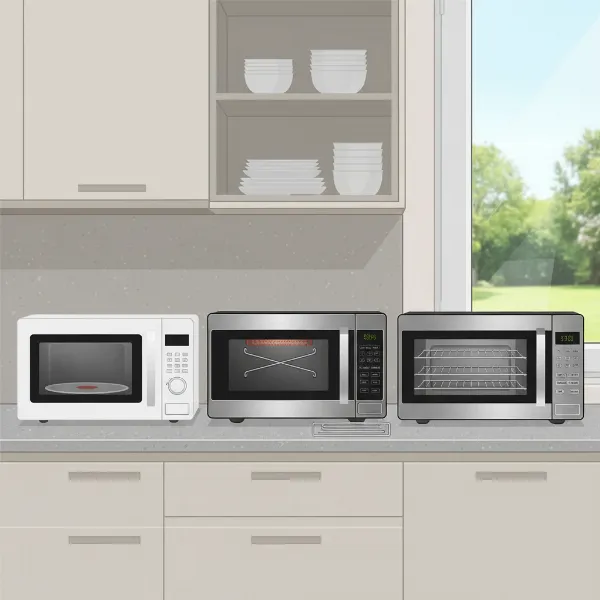 Different types of microwave ovens in a kitchen, showcasing solo, grill, and convection models.
Solo Microwave: The Basic Workhorse
A solo microwave is the most fundamental and straightforward type of microwave oven. It utilizes only microwave technology for cooking, reheating, and defrosting food. These models are designed for users who primarily need to warm leftovers, make popcorn, or quickly defrost ingredients.
Pros of Solo Microwaves:
- Affordability: Generally the least expensive option, making them budget-friendly.
- Simplicity: Easy to operate with basic controls, often featuring manual dials or simple push buttons.
- Compact Size: Typically smaller, ideal for compact kitchens, dorm rooms, or offices where space is limited.
- Energy Efficiency (for basic tasks): Uses less electricity for simple reheating and defrosting compared to more complex models.
- Speed: Excellent for quickly heating water-based foods.
Cons of Solo Microwaves:
- Limited Functionality: Cannot brown, crisp, bake, roast, or grill food. Dishes cooked in a solo microwave often lack texture and can be soggy.
- Utensil Restrictions: Only microwave-safe glass or plastic containers can be used; metal is strictly forbidden due to sparking.
|
Our Picks for the Best Microwave oven in 2026
As an Amazon Associate I earn from qualifying purchases.
|
||
| Num | Product | Action |
|---|---|---|
| 1 | BLACK+DECKER EM720CB7 Digital Microwave Oven with Turntable Push-Button Door, Child Safety Lock, 700W, Stainless Steel, 0.7 Cu.ft |

|
| 2 | TOSHIBA EM131A5C-SS Countertop Microwave Ovens 1.2 Cu Ft with 12.4" Removable Turntable Smart Humidity Sensor, 12 Auto Menus Mute Function ECO Mode Easy Clean Interior, 1000W, Silver |
|
| 3 | COMFEE CMO-C20M1WH Retro Microwave with 11 power levels, Fast Multi-stage Cooking, Turntable Reset Function Kitchen Timer, Speedy Cooking, Weight/Time Defrost, Memory function, Children Lock, 700W |
|
| 4 | COMFEE' Retro Small Microwave Oven With Compact Size, 9 Preset Menus, Position-Memory Turntable, Mute Function, Countertop Microwave For Small Spaces, 0.7 Cu Ft/700W, Green, AM720C2RA-G |
|
| 5 | Chefman Countertop Microwave Oven 0.7 Cu. Ft., 700 Watts with 10 Power Levels, 6 Cooking Presets with One-Touch Express Cook, Eco Mode, Child Safety Lock, & Mute Button - Black |
|
| 6 | GASLAND 30 Inch Over-the-Range Microwave Oven, 1.7 Cu.Ft Over Stove Microwave, 1000W with 10 Power Levels, Sensor & One-Touch Cooking, 300 CFM Venting, LED Cooktop Light, Black Kitchen Microwave |
|
| 7 | COMFEE' EM720CPL-PMB Countertop Microwave Oven with Sound On/Off, ECO Mode and Easy One-Touch Buttons, 0.7cu.ft, 700W, Black |
|
| 8 | TOSHIBA EM131A5C-BS Countertop Microwave Ovens 1.2 Cu Ft, 12.4" Removable Turntable Smart Humidity Sensor 12 Auto Menus Mute Function ECO Mode Easy Clean Interior Black Color 1000W |
|
| 9 | COMFEE' Retro Small Microwave Oven With Compact Size, 9 Preset Menus, Position-Memory Turntable, Mute Function, Countertop, Perfect For Small Spaces, 0.7 Cu Ft/700W, Red, AM720C2RA-R |
|
| 10 | COMFEE' Retro Small Microwave Oven With Compact Size, 9 Preset Menus, Position-Memory Turntable, Mute Function, Countertop Perfect For Spaces, 0.7 Cu Ft/700W, Cream, AM720C2RA-A |
|
Who is it for?
Solo microwaves are perfect for individuals, students, bachelors, or small families whose main requirements are reheating, defrosting, and simple cooking tasks.
Grill Microwave: Adding that Crispy Touch
A grill microwave oven builds upon the basic solo functionality by incorporating a heating coil. This additional element allows for grilling, toasting, and browning dishes, adding a desirable crispy texture that a solo microwave cannot achieve.
Pros of Grill Microwaves:
- Enhanced Texture: The grilling element gives food a crispy, golden finish, perfect for items like grilled sandwiches, cheese on toast, or small meat portions.
- Versatility: Offers more cooking options than a solo microwave, combining reheating/defrosting with grilling capabilities.
- Space-Saving: Effectively combines two appliances (microwave and grill) into one, saving valuable counter space.
- Indoor Grilling: Allows you to enjoy grilled food year-round, regardless of weather.
- Faster Grilling: Generally quicker than traditional grilling methods due to the combined microwave heating.
Cons of Grill Microwaves:
- Cannot Bake: While it can grill, a grill microwave cannot perform baking or roasting functions like a conventional oven.
- Higher Energy Consumption: Uses more energy than solo microwaves due to the heating coil.
- Price: More expensive than solo microwaves.
Who is it for?
Ideal for those who enjoy grilled and toasted foods, want to add a crispy finish to their meals, but don’t need the full baking capabilities of a conventional oven.
Convection Microwave: The All-in-One Culinary Hub
The convection microwave oven is the most advanced and versatile type, functioning as both a microwave and a convection oven. It combines microwave heating with a heating element and a fan that circulates hot air throughout the cavity, much like a traditional oven. This enables it to perform a wide range of cooking tasks, including baking, roasting, grilling, and browning, in addition to standard microwave functions.
Pros of Convection Microwaves:
- Ultimate Versatility: An all-rounder that can reheat, defrost, grill, bake, roast, and crisp. It’s like having a microwave and a small oven in one appliance.
- Even Cooking: The circulating hot air ensures food cooks evenly and thoroughly, producing results comparable to a conventional oven.
- Crispy, Browned Results: Capable of achieving golden-brown crusts and crispy textures for baked goods, roasted meats, and more.
- Faster Cooking (Combination Mode): Many models offer a “combination” mode, using both microwave and convection heating simultaneously to significantly reduce cooking times.
- Energy Efficiency (compared to full-size oven): Can be more energy-efficient for cooking smaller portions than preheating and using a large conventional oven.
- Space-Saving: An excellent solution for smaller kitchens or apartments where a separate oven might not be feasible, eliminating the need for multiple appliances.
Cons of Convection Microwaves:
- Highest Price: The most expensive type of microwave due to its advanced features.
- Higher Energy Consumption (for convection cooking): While efficient for smaller meals, continuous convection use will consume more energy than a solo microwave.
- Learning Curve: May require some getting used to due to the variety of modes and settings.
- Cleaning: Exposed heating elements can accumulate food splatter, requiring more frequent and thorough cleaning to prevent odors and smoke.
- Limited Capacity (compared to full-size oven): While versatile, the internal capacity is still smaller than a traditional oven, limiting very large roasts or multiple dishes at once.
Who is it for?
Perfect for cooking enthusiasts, larger families, or anyone with limited kitchen space who desires the full range of cooking functionalities – from quick reheating to baking cakes and roasting chicken – all in one appliance.
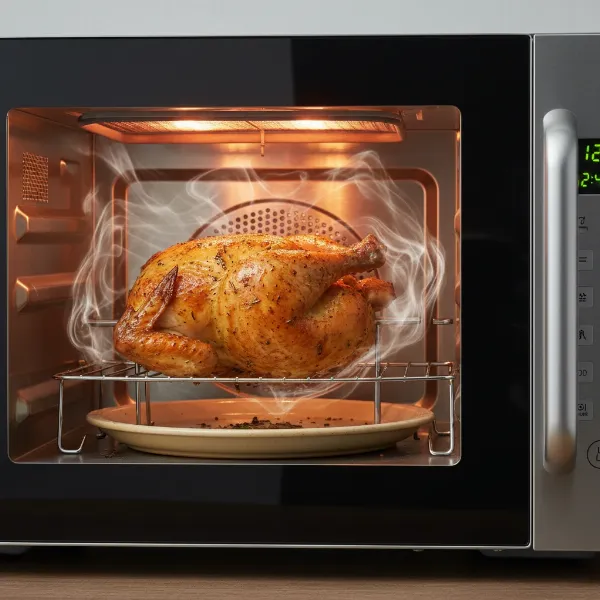 Convection microwave cooking a variety of foods, demonstrating baking, roasting, and grilling.
Comparing Microwave Types: A Quick Overview
To help visualize the differences, here’s a quick comparison:
| Feature/Type | Solo Microwave | Grill Microwave | Convection Microwave |
|---|---|---|---|
| Primary Function | Reheating, Defrosting, Simple Cooking | All Solo functions + Grilling, Toasting, Browning | All Solo & Grill functions + Baking, Roasting, Crisping |
| Browning/Crisping | No | Yes | Yes (Oven-quality) |
| Baking/Roasting | No | No | Yes |
| Energy Usage | Lowest (for basic tasks) | Medium | Highest (for convection mode) |
| Cost | Lowest | Medium | Highest |
| Ideal For | Quick snacks, reheating leftovers, small meals | Grilled sandwiches, cheesy dishes, crisping | Full meals, baking, roasting, diverse cooking |
| Space-Saving | Yes (small footprint) | Yes (2-in-1) | Excellent (3-in-1, replaces oven) |
| Utensil Safety | Microwave-safe glass/plastic only | Grill-safe cookware (metal rack often included) | Microwave-safe for microwave mode, metal for convection |
Top Microwave Oven Brands
When considering a new microwave, certain brands consistently stand out for their reliability, innovation, and range of options across solo, grill, and convection categories. Here’s a look at some leading manufacturers:
- Samsung: Known for innovative features, sleek designs, and durable ceramic enamel cavities that are easy to clean and rust-resistant. They offer strong options in all categories, including models with combination modes and advanced programming.
- LG: Offers a wide array of microwaves, often featuring Inverter technology for precise and even cooking, and stylish designs. Their convection models are highly regarded for performance.
- Panasonic: A pioneer in Inverter technology, providing consistent power delivery for better cooking results. They have reliable solo and convection options.
- Sharp: Known for user-friendly interfaces and robust build quality. Sharp offers a good balance of features across its solo, grill, and convection ranges.
- Whirlpool: Provides a good range of microwaves, often integrating useful features like sensor cooking and sturdy construction, suitable for various budgets.
- IFB: A popular choice, especially for convection microwaves, offering a robust feature set, often including auto-cook menus and child lock capabilities.
- Toshiba: Known for reliable performance and good value, with models catering to basic solo needs as well as more advanced convection functions.
- Breville: Offers premium options with intuitive controls, smart features, and high performance, particularly in the mid-to-high-end segment.
When choosing a brand, consider factors such as your budget, specific feature needs, warranty, and customer service reputation. Many brands offer models with varying capacities, power levels, and additional smart features to cater to every kind of cook.
Guide to Choosing the Right Microwave Oven
Selecting the perfect microwave isn’t just about picking a type; it involves considering several practical aspects that align with your lifestyle and kitchen setup.
Determine Your Cooking Needs
- Simple Reheating & Defrosting: If you mostly warm leftovers, make instant noodles, or defrost ingredients, a solo microwave is sufficient and cost-effective.
- Crispy & Toasted Dishes: If you love grilled cheese, crispy chicken wings, or want to brown the top of a casserole, a grill microwave offers the extra functionality you need.
- Baking, Roasting & Full Meals: For those who enjoy baking cakes, roasting vegetables, or want to use their microwave as a secondary oven, a convection microwave is the ultimate choice. Its versatility replaces several appliances.
Consider Capacity and Power
- Capacity (Liters):
- Small (15-20L): Ideal for individuals or couples with minimal cooking needs.
- Medium (21-25L): Suitable for small families (3-4 members) or those who cook frequently.
- Large (26L+): Best for larger families or those who often cook bigger dishes, roasts, or entertain guests.
- Wattage/Power (Watts): Higher wattage (typically 800-1200W) means faster and more efficient cooking. Look for at least 700W for decent performance; 900W+ is recommended for optimal speed.
Features That Matter
- Inverter Technology: Provides a continuous, even flow of power, preventing overcooking and preserving food texture and nutrients. It also saves energy.
- Auto-Cook Menus: Pre-programmed settings for popular dishes (popcorn, pizza, vegetables) simplify cooking and remove guesswork.
- Child Lock: Essential for families with young children, preventing accidental operation.
- Defrost Settings: Options for weight-based or time-based defrosting ensure food is thawed evenly.
- Timer & Delay Start: Convenient for meal planning and precise cooking.
- Interior Material:
- Ceramic Enamel: Durable, scratch-resistant, easy to clean, and often anti-bacterial.
- Stainless Steel: Aesthetically pleasing, highly durable, but can be harder to clean and may show fingerprints.
- Epoxy/Coated: Common in budget models, easy to clean but less durable.
Design and Aesthetics
Microwaves come in various finishes (stainless steel, black, white) and designs (countertop, built-in, over-the-range). Choose one that complements your kitchen decor and fits your available space.
Read Reviews and Compare
Before making a final decision, always read user reviews for insights into real-world performance, durability, and customer satisfaction. Compare models from different brands based on features, price, and warranty to ensure you get the best value.
Useful Microwave Features for Everyday Cooking
Modern microwaves, especially grill and convection models, offer a host of features designed to make daily cooking easier, faster, and more enjoyable.
- Quick Start/Express Cook: Allows you to start cooking at full power with a single touch, usually in 30-second or 1-minute increments.
- Sensor Cooking: Automatically adjusts cooking time and power levels based on humidity released from the food, preventing over- or under-cooking.
- Multi-Stage Cooking: Programs the microwave to switch between different power levels and functions (e.g., defrost, then cook) automatically.
- Preheat Function: For convection models, this allows the oven to reach a desired temperature before food is placed inside, similar to a conventional oven.
- Deodorization Setting: Helps remove lingering food odors from the microwave cavity after cooking strong-smelling dishes.
Cleaning and Maintenance for Longevity
Proper care and maintenance are crucial for extending the life of your microwave oven and ensuring hygienic operation.
Daily Cleaning Tips
- Wipe After Each Use: Clean up spills and splatters immediately with a damp cloth and mild detergent. This prevents food from drying and hardening, which makes it much harder to remove later.
- Steam Clean: Place a bowl of water with lemon slices or white vinegar inside and microwave on high for 2-5 minutes. The steam will loosen grime, making it easy to wipe away.
- Clean the Turntable: Remove the glass turntable and wash it regularly with dish soap and water.
Odor Removal
- Lemon or Vinegar: As mentioned above, using lemon or vinegar in water to steam clean also helps neutralize odors.
- Baking Soda: Leave an open box of baking soda inside the microwave overnight to absorb stubborn smells.
- Activated Charcoal: Similar to baking soda, a small bowl of activated charcoal can help absorb odors.
General Maintenance
- Keep Vents Clear: Ensure the microwave’s ventilation openings are not blocked to prevent overheating.
- Check Door Seal: Periodically inspect the door seal for any damage, as a compromised seal can lead to microwave leakage.
- Avoid Abrasive Cleaners: Harsh chemicals or abrasive scrubbing pads can damage the interior finish.
- Professional Servicing: If you notice any unusual noises, sparks, or malfunctions, contact a qualified technician. Do not attempt to repair it yourself.
Essential Safety Precautions When Using a Microwave
Microwaves are safe when used correctly, but certain precautions are vital to prevent accidents and damage.
- No Metal in Microwave Mode: Never use metal containers, aluminum foil, or dishes with metallic accents in a solo or grill microwave’s microwave mode, as this can cause sparks and fire. For convection microwaves, metal is generally safe in convection-only mode but not microwave mode.
- Use Microwave-Safe Cookware: Always use dishes labeled “microwave-safe.” Glass, ceramic, and specific types of plastic are generally safe.
- Avoid Overheating Liquids: Liquids can superheat in a microwave, meaning they get hotter than their boiling point without bubbling. Stirring or adding an object (like a wooden stick) before removal can prevent sudden eruptions and burns.
- Do Not Operate When Empty: Running an empty microwave can damage the magnetron and other internal components.
- Ensure Proper Ventilation: Place the microwave on a flat, stable surface with adequate space around it for air circulation.
- Never Cook Unsealed Eggs or Whole Potatoes: The internal pressure build-up can cause them to explode. Pierce potatoes and remove eggshells before cooking.
- Do Not Tamper with Damaged Units: If the door, latch, or seal is damaged, or if the microwave is otherwise malfunctioning, stop using it immediately and seek professional repair.
Conclusion: Finding Your Perfect Microwave Match
Choosing between a solo, grill, or convection microwave comes down to understanding your cooking habits and desired functionalities. The solo microwave is an economical choice for basic reheating, while the grill microwave adds the pleasing crunch and browning capabilities. For the ultimate culinary flexibility, allowing you to bake, roast, grill, and quickly cook all in one compact appliance, the convection microwave stands out as the premium all-rounder.
Consider your budget, available kitchen space, and how adventurous you are in the kitchen. By evaluating these factors, you can confidently select a microwave oven that not only fits seamlessly into your home but also inspires delicious meals for years to come. What culinary creations will you embark on with your new microwave?
Frequently Asked Questions
Can I bake a cake in a grill microwave oven?
No, a grill microwave oven typically cannot bake a cake effectively. While it has a heating element for grilling and browning, it lacks the fan-assisted hot air circulation of a convection oven necessary for even baking and rising. You would need a convection microwave for baking.
Is a convection microwave oven more energy-efficient than a traditional oven?
For smaller dishes or meals, a convection microwave oven is often more energy-efficient than a traditional full-sized oven. It preheats faster and typically uses less energy due to its smaller cavity size and combined cooking methods.
What is “Inverter Technology” in microwaves?
Inverter technology provides a continuous, constant power level for cooking, unlike traditional microwaves that cycle between full power and off. This results in more even cooking, better texture preservation, and more precise temperature control, particularly useful for defrosting and delicate foods.
How often should I clean my microwave oven?
For optimal hygiene and performance, it’s recommended to wipe down the interior of your microwave after each use. A deeper clean, including the turntable and odor removal, should be done at least once a week, or more frequently if spills occur.
Can I use metal in a convection microwave?
Yes, you can typically use metal bakeware in a convection microwave when it is operating in convection-only mode, similar to a conventional oven. However, never use metal when the microwave function is active, as this will cause dangerous sparking and damage to the appliance. Always check your microwave’s manual for specific guidelines.
What is the ideal wattage for a microwave oven?
For efficient heating and cooking, a microwave oven with at least 700 watts is generally recommended. For faster cooking times and better performance, especially in combination or convection models, a wattage of 900 watts or higher is ideal.