The sudden flash and crackle of sparks inside your microwave can be startling, turning a routine reheating task into a moment of alarm. But don’t panic. While a sparking microwave, also known as arcing, demands immediate attention and discontinuation of use, many common causes are surprisingly simple to diagnose and fix yourself. This comprehensive guide will walk you through identifying why your microwave is sparking, assess the potential dangers, and provide clear, step-by-step solutions to get your microwave oven safely back in working order or help you decide when it’s time to call in a professional.
What Causes a Microwave to Spark?
Microwaves operate by generating electromagnetic waves that vibrate water molecules in food, heating it rapidly. When these waves encounter certain materials or conditions, they can create an electric arc, leading to sparks. Understanding these common culprits is the first step toward troubleshooting the issue.
Metal Objects in the Microwave
The most frequent and obvious cause of sparking is the presence of metal. Microwaves reflect off metal surfaces, causing a rapid buildup of energy that manifests as bright, blue-white flashes and crackling sounds. This includes:
- Aluminum foil: Even small pieces used to cover food can cause arcing.
- Metal utensils: Spoons, forks, or twist-ties accidentally left inside.
- Cookware with metallic trim: Some ceramic or porcelain dishes have decorative metallic edges that are not microwave-safe.
- Wire racks: While some microwaves come with approved metal racks, improper placement or damage to the rack’s coating can cause sparks.
|
Our Picks for the Best Microwave oven in 2026
As an Amazon Associate I earn from qualifying purchases.
|
||
| Num | Product | Action |
|---|---|---|
| 1 | COMFEE' Retro Small Microwave Oven With Compact Size, 9 Preset Menus, Position-Memory Turntable, Mute Function, Countertop Perfect For Spaces, 0.7 Cu Ft/700W, Cream, AM720C2RA-A |

|
| 2 | COMFEE' EM720CPL-PMB Countertop Microwave Oven with Sound On/Off, ECO Mode and Easy One-Touch Buttons, 0.7cu.ft, 700W, Black |
|
| 3 | COMFEE' Retro Small Microwave Oven With Compact Size, 9 Preset Menus, Position-Memory Turntable, Mute Function, Countertop Microwave For Small Spaces, 0.7 Cu Ft/700W, Green, AM720C2RA-G |
|
| 4 | COMFEE' Retro Small Microwave Oven With Compact Size, 9 Preset Menus, Position-Memory Turntable, Mute Function, Countertop, Perfect For Small Spaces, 0.7 Cu Ft/700W, Red, AM720C2RA-R |
|
| 5 | BLACK+DECKER EM720CB7 Digital Microwave Oven with Turntable Push-Button Door, Child Safety Lock, 700W, Stainless Steel, 0.7 Cu.ft |
|
| 6 | TOSHIBA EM131A5C-SS Countertop Microwave Ovens 1.2 Cu Ft with 12.4" Removable Turntable Smart Humidity Sensor, 12 Auto Menus Mute Function ECO Mode Easy Clean Interior, 1000W, Silver |
|
| 7 | Chefman Countertop Microwave Oven 0.7 Cu. Ft., 700 Watts with 10 Power Levels, 6 Cooking Presets with One-Touch Express Cook, Eco Mode, Child Safety Lock, & Mute Button - Black |
|
| 8 | GASLAND 30 Inch Over-the-Range Microwave Oven, 1.7 Cu.Ft Over Stove Microwave, 1000W with 10 Power Levels, Sensor & One-Touch Cooking, 300 CFM Venting, LED Cooktop Light, Black Kitchen Microwave |
|
| 9 | TOSHIBA EM131A5C-BS Countertop Microwave Ovens 1.2 Cu Ft, 12.4" Removable Turntable Smart Humidity Sensor 12 Auto Menus Mute Function ECO Mode Easy Clean Interior Black Color 1000W |
|
| 10 | COMFEE CMO-C20M1WH Retro Microwave with 11 power levels, Fast Multi-stage Cooking, Turntable Reset Function Kitchen Timer, Speedy Cooking, Weight/Time Defrost, Memory function, Children Lock, 700W |
|
Always double-check your dishes and food packaging for any hidden metal before starting the microwave.
Food and Grease Buildup
Over time, food splatters and grease can accumulate on the interior walls and ceiling of your microwave oven. These carbonized food particles can absorb microwave energy, overheat, and ignite, leading to sparks and a burning smell. This is especially common on the waveguide cover. Regular cleaning is crucial to prevent this.
Damaged Waveguide Cover
The waveguide cover is a small, rectangular or square plate, often made of mica or paperboard, located inside the microwave cavity (usually on the right-hand side wall). Its purpose is to protect the magnetron (the component that produces microwaves) from food splatters and moisture while allowing microwaves to pass through. If this cover becomes dirty, stained, or burnt, it can absorb microwave energy, degrade, and cause significant arcing. A damaged waveguide cover is one of the most common reasons for sparking and is often a straightforward, inexpensive repair.
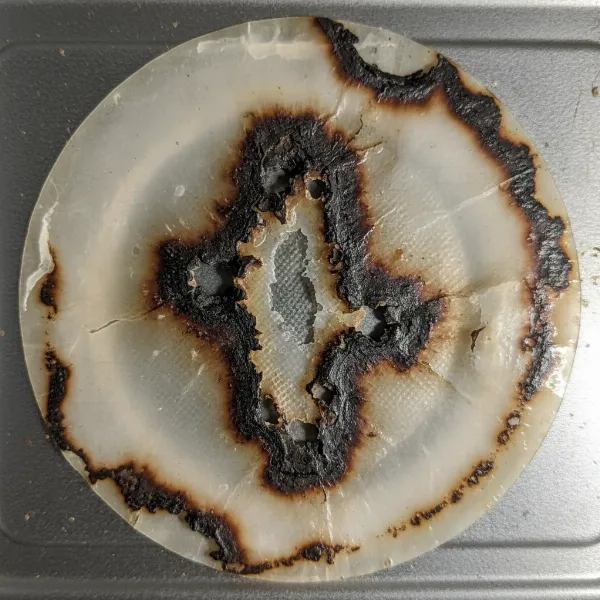 Close-up of a burnt and damaged microwave waveguide cover, showing charring and holes.
Chipped Interior Paint or Coating
The interior of your microwave oven is coated with a special, microwave-safe paint. If this paint becomes chipped, peeled, or scratched, it can expose the bare metal underneath. When microwaves hit this exposed metal, they can cause sparking. Overheating or continuous arcing from other issues can also burn the paint, creating more areas for sparks to occur.
Faulty Internal Components
While less common for DIY fixes, sparking can also indicate a more serious internal issue with the microwave’s components:
- Magnetron: The heart of the microwave, generating the microwave energy. A faulty or worn-out magnetron can cause arcing.
- Diode: Part of the high-voltage system, a failing diode can lead to sparking and improper heating.
- Stirrer Fan or Motor: Some microwaves have a stirrer fan that helps distribute microwaves evenly. If this fan or its motor is faulty, microwaves may concentrate in one area, causing arcing.
Issues with these internal components typically require professional diagnosis and repair, as they involve high voltage and can be dangerous to handle without proper training.
High Mineral Content Foods
Occasionally, certain foods with a high mineral content, such as green beans, carrots, or spinach, can spark in the microwave. This happens because the minerals can act like tiny pieces of metal, reflecting microwave energy. This type of sparking is usually harmless and infrequent, but if it occurs regularly with specific foods, you might consider adjusting cooking times or methods.
Is a Sparking Microwave Dangerous?
Yes, a sparking microwave can be dangerous and should be addressed immediately. While an isolated spark from a piece of foil might seem minor, prolonged or recurring arcing can lead to several hazards:
- Appliance Damage: Continuous sparking can damage the microwave’s internal components, including the waveguide cover, the interior coating, and potentially the magnetron, leading to costly repairs or rendering the appliance irreparable.
- Fire Risk: The intense heat generated by electrical arcs can ignite carbonized food residue, plastic, or other flammable materials inside the microwave, posing a significant fire hazard to your home.
- Electrical Hazards: Microwaves operate with high voltage. Tampering with internal electrical components without proper knowledge and safety precautions can result in severe electrical shock.
- Uneven Heating: Even if sparks don’t immediately cause a fire, the microwave’s performance will be compromised, leading to inefficient and uneven cooking.
If you observe sparking, stop the microwave immediately by turning it off and unplugging it from the power outlet. Do not continue to use it until the cause has been identified and resolved.
Step-by-Step Guide: How to Troubleshoot and Fix a Sparking Microwave
Before you begin any troubleshooting or repair, always ensure the microwave is unplugged from the wall socket. This is a critical safety measure.
Step 1: Unplug and Inspect Thoroughly
With the microwave unplugged, open the door and perform a detailed visual inspection of the interior.
- Remove everything: Take out the turntable, roller ring, and any dishes.
- Check for metal: Carefully inspect the cavity for any hidden pieces of aluminum foil, stray metal crumbs, or utensils. Examine your usual microwave-safe dishes for any metallic glazes or trims.
- Inspect for food residue: Look for burnt food particles, grease buildup, or carbonized spots on the interior walls, ceiling, floor, and especially on the waveguide cover.
- Examine the waveguide cover: This is often a good starting point. Look for signs of burning, charring, holes, tears, or excessive grease buildup on the mica or paperboard cover. It’s usually a light grey or silvery rectangular piece.
- Check the interior paint: Look for any chips, cracks, or areas where the interior paint has peeled away, exposing the metal underneath. Pay close attention to the ceiling and side walls.
Step 2: Clean the Microwave Interior
A dirty microwave is a prime candidate for sparking. Even if you don’t immediately spot the source, a thorough cleaning can often resolve the issue.
- Prepare a cleaning solution: Fill a microwave-safe bowl with 1 cup of water and 1-2 tablespoons of white vinegar or lemon juice.
- Steam clean: Place the bowl in the microwave and heat on high for 5 minutes. Let it sit in the closed microwave for another 5-10 minutes to allow the steam to loosen grime.
- Wipe down: Carefully remove the hot bowl. Using a damp microfiber cloth or sponge, wipe down the entire interior, including the ceiling, walls, and floor. Pay special attention to any burnt spots or heavy grease. For stubborn spots, a mild abrasive cleaner designed for microwaves can be used, but avoid harsh chemicals or metal scrubbers.
- Clean the turntable and roller: Wash these components separately with soap and water.
After cleaning, allow the microwave to dry completely before plugging it back in and testing.
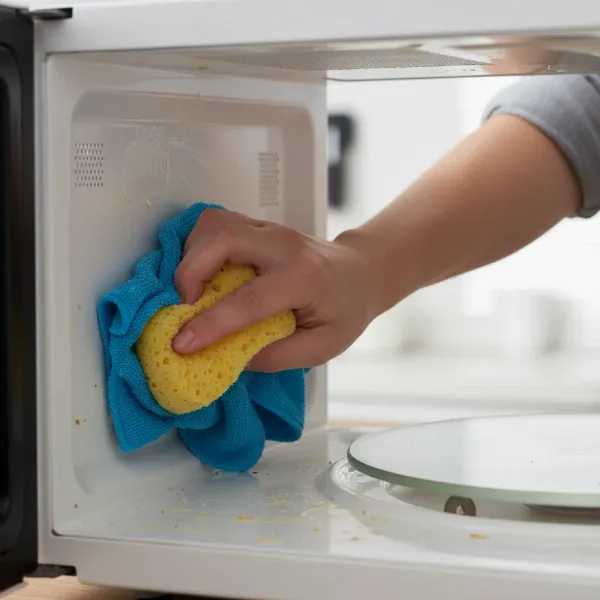 Person cleaning microwave interior with sponge and cloth to remove food.
Step 3: Replace a Damaged Waveguide Cover
If your inspection revealed a burnt or damaged waveguide cover, this is a common and relatively easy DIY repair.
- Identify the damage: Look for burn marks, discoloration, holes, or tears on the mica sheet.
- Remove the old cover: Most waveguide covers are held in place by small plastic clips or screws. Gently pry off the clips with your fingernails or a small screwdriver, or unscrew them. Carefully slide the old cover out.
- Purchase a replacement:
- Model-specific: Search online for a replacement waveguide cover using your microwave’s specific make and model number.
- Universal mica sheet: You can often buy universal mica sheets and cut them to size. Use the old waveguide cover as a template to trace and cut the new one using a utility knife or sharp scissors. Ensure the edges are smooth.
- Install the new cover: Slide the new waveguide cover into place, ensuring it fits securely. If it had clips or screws, reattach them.
Once the new cover is installed, you can test the microwave.
Step 4: Repair Chipped Interior Paint
If you found chipped paint exposing metal, this also needs to be addressed.
- Clean the area: Use isopropyl alcohol to clean the damaged area, removing any grease or debris.
- Lightly sand: Gently sand the chipped area with fine-grit sandpaper (around 220-grit) to smooth out any rough edges and ensure good adhesion for the paint. Wipe away any dust.
- Apply microwave-safe cavity paint: Purchase touch-up paint specifically designed for microwave interiors. Apply thin coats with a small brush, following the manufacturer’s drying instructions between coats. You may need one or two coats for full coverage.
- Allow to cure: Let the paint cure completely, as per the product’s instructions, before using the microwave. This might take several hours or even a day.
Step 5: When to Call a Professional
While many sparking issues can be resolved with DIY efforts, some situations warrant professional assistance for safety and effective repair:
- Persistent sparking: If the microwave continues to spark after you’ve performed all the troubleshooting steps (removed metal, cleaned thoroughly, and replaced the waveguide cover and/or repaired paint).
- Internal component issues: If you suspect a problem with the magnetron, diode, or stirrer fan/motor. These components are complex and involve high voltage.
- Safety concerns: Microwaves contain a high-voltage capacitor that can store a lethal electrical charge for an extended period, even after the appliance is unplugged. Never attempt to disassemble the outer casing or tamper with internal electrical components unless you are a qualified technician.
- Burning smell or smoke: If sparking is accompanied by smoke, strong burning odors, or unusual noises, discontinue use immediately and call a professional.
“While many minor microwave issues can be resolved at home, never underestimate the dangers of high-voltage components. If you’re unsure, or if the problem persists, consulting a certified appliance technician is always the safest course of action.” – John Smith, Master Appliance Technician.
Preventative Maintenance Tips for Your Microwave
Regular maintenance can significantly extend the life of your microwave oven and prevent future sparking issues.
- Clean regularly: Wipe down the interior of your microwave after each use to prevent food buildup. Deep clean it weekly with a vinegar/water solution.
- Use microwave-safe cookware: Always check for “microwave-safe” labels on dishes and containers. Avoid metal, aluminum foil (unless specifically instructed for certain modes/foods in a convection microwave), and dishes with metallic trims.
- Cover food: Use microwave-safe covers or paper towels to prevent splatters and reduce food buildup.
- Avoid overcrowding: Ensure enough space for the turntable to rotate freely and for microwaves to circulate.
- Inspect the waveguide cover: Periodically check the mica sheet for any signs of wear or damage during cleaning.
Conclusion: Choosing the Safest Solution for Your Microwave Oven
A sparking microwave can be a concerning appliance malfunction, but with a systematic approach, you can often pinpoint and resolve the problem effectively. The most common culprits—metal objects, food residue, and a damaged waveguide cover—are typically within the scope of a confident DIYer. Remember, safety is paramount; always unplug your microwave before any inspection or repair. For more complex issues involving internal electrical components or if sparking persists after your best efforts, contacting a qualified appliance technician is crucial to ensure both your microwave’s longevity and your household’s safety. Don’t let a few sparks ruin your microwave oven; take action, troubleshoot wisely, and enjoy safe, convenient cooking for years to come.
Do you have any personal experiences with fixing a sparking microwave, or perhaps a unique tip to share?
Frequently Asked Questions
Is it safe to use a microwave that sparks occasionally?
No, it is generally not safe to use a microwave that sparks, even occasionally. Sparking, also known as arcing, indicates an electrical discharge that can damage the appliance, potentially lead to fire, or create other electrical hazards. You should stop using it immediately and troubleshoot the cause before further use.
What is a waveguide cover in a microwave?
The waveguide cover is a small, typically rectangular or square, plate made of mica or treated paperboard found inside the microwave oven cavity. Its primary function is to protect the magnetron (the component generating microwaves) from food splatters and moisture, while allowing the microwaves to pass through and heat your food.
Can old food cause a microwave to spark?
Yes, old or burnt food and grease residue inside the microwave oven cavity can absolutely cause sparking. These carbonized food particles can absorb microwave energy, overheat, and ignite, leading to visible sparks and sometimes a burning smell. Regular cleaning is essential to prevent this.
How often should I clean my microwave?
It is recommended to wipe down the interior of your Microwave Oven after each use to prevent fresh food splatters from drying and hardening. For a deeper clean, using a steam cleaning method with water and vinegar or lemon juice, aim for at least once a week, or more frequently if it sees heavy use.
Can I fix a sparking microwave myself?
Many common causes of a sparking microwave, such as metal objects, food buildup, or a damaged waveguide cover, can often be fixed by yourself with basic tools and careful attention to safety. However, if the issue involves internal electrical components like the magnetron or diode, it is strongly advised to seek professional repair due to high voltage risks.