Many of us rely on the microwave for quick heating, especially when it comes to boiling water for tea, coffee, or instant meals. It seems like a simple, convenient task. However, a phenomenon known as superheating can turn this everyday convenience into a serious burn hazard. Understanding how to safely boil water in your microwave oven is crucial for preventing unexpected and dangerous eruptions that can lead to severe scalding injuries. This guide will walk you through the science behind superheating and provide practical, easy-to-follow safety tips to keep you and your family safe.
What is Superheated Water in a Microwave?
Superheating occurs when water is heated beyond its normal boiling point of 212°F (100°C) without actually forming bubbles. On a stovetop, water boils through convection, where heat is applied from below, creating currents and allowing bubbles to form and rise. In contrast, microwave ovens heat water molecules directly and rapidly from all directions. This direct heating, particularly in smooth containers like new ceramic mugs or glass, can prevent the formation of “nucleation sites”—tiny imperfections or trapped air pockets where water vapor bubbles typically begin to form. Without these sites, the water simply gets hotter and hotter, appearing perfectly still and calm, even though it’s well above boiling temperature. The surface tension of the water also plays a role, holding the superheated liquid together without allowing it to vaporize into steam.
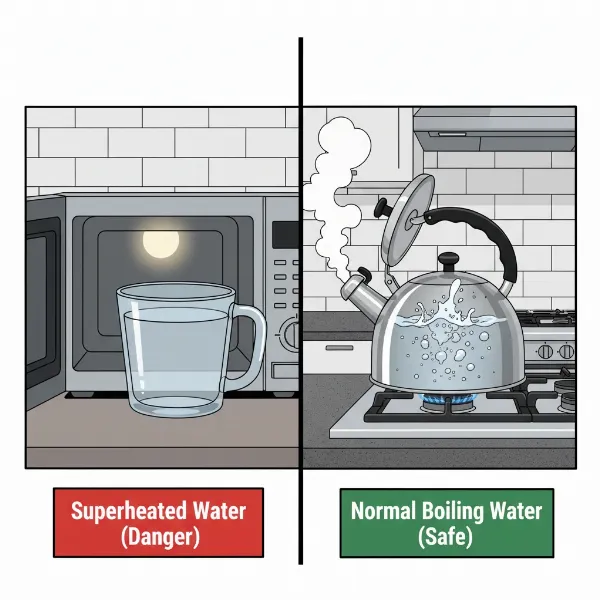 A clear glass mug of still, superheated water in a microwave, contrasting with a stovetop kettle boiling with visible bubbles.
The Hidden Dangers: Why Superheating is a Serious Concern
The calm appearance of superheated water belies a significant amount of stored energy. This invisible danger becomes apparent when the water is disturbed. Any sudden movement, such as taking the cup out of the microwave, placing it on a counter, or introducing an object like a spoon, tea bag, or instant coffee grounds, can trigger an instantaneous and violent release of this trapped energy. The water can rapidly flash into steam, causing it to erupt explosively out of the container. This sudden “explosion” of vigorously boiling water can spray scorching hot liquid onto your hands, face, and other exposed skin, resulting in severe scalding burns. Emergency rooms have reported numerous cases of patients suffering serious injuries from these microwave accidents, underscoring the critical need for caution.
Essential Safety Tips for Boiling Water in Your Microwave Oven
While using a kettle or stovetop is generally the safest method for boiling water, sometimes a microwave is the only option. By following these essential safety tips, you can significantly reduce the risk of superheating and ensure a safer experience when heating liquids in your microwave oven.
Choose the Right Container
|
Our Picks for the Best Microwave oven in 2026
As an Amazon Associate I earn from qualifying purchases.
|
||
| Num | Product | Action |
|---|---|---|
| 1 | BLACK+DECKER EM720CB7 Digital Microwave Oven with Turntable Push-Button Door, Child Safety Lock, 700W, Stainless Steel, 0.7 Cu.ft |

|
| 2 | COMFEE' Retro Small Microwave Oven With Compact Size, 9 Preset Menus, Position-Memory Turntable, Mute Function, Countertop Perfect For Spaces, 0.7 Cu Ft/700W, Cream, AM720C2RA-A |
|
| 3 | Chefman Countertop Microwave Oven 0.7 Cu. Ft., 700 Watts with 10 Power Levels, 6 Cooking Presets with One-Touch Express Cook, Eco Mode, Child Safety Lock, & Mute Button - Black |
|
| 4 | GASLAND 30 Inch Over-the-Range Microwave Oven, 1.7 Cu.Ft Over Stove Microwave, 1000W with 10 Power Levels, Sensor & One-Touch Cooking, 300 CFM Venting, LED Cooktop Light, Black Kitchen Microwave |
|
| 5 | TOSHIBA EM131A5C-SS Countertop Microwave Ovens 1.2 Cu Ft with 12.4" Removable Turntable Smart Humidity Sensor, 12 Auto Menus Mute Function ECO Mode Easy Clean Interior, 1000W, Silver |
|
| 6 | TOSHIBA EM131A5C-BS Countertop Microwave Ovens 1.2 Cu Ft, 12.4" Removable Turntable Smart Humidity Sensor 12 Auto Menus Mute Function ECO Mode Easy Clean Interior Black Color 1000W |
|
| 7 | COMFEE' Retro Small Microwave Oven With Compact Size, 9 Preset Menus, Position-Memory Turntable, Mute Function, Countertop, Perfect For Small Spaces, 0.7 Cu Ft/700W, Red, AM720C2RA-R |
|
| 8 | COMFEE' EM720CPL-PMB Countertop Microwave Oven with Sound On/Off, ECO Mode and Easy One-Touch Buttons, 0.7cu.ft, 700W, Black |
|
| 9 | COMFEE' Retro Small Microwave Oven With Compact Size, 9 Preset Menus, Position-Memory Turntable, Mute Function, Countertop Microwave For Small Spaces, 0.7 Cu Ft/700W, Green, AM720C2RA-G |
|
| 10 | COMFEE CMO-C20M1WH Retro Microwave with 11 power levels, Fast Multi-stage Cooking, Turntable Reset Function Kitchen Timer, Speedy Cooking, Weight/Time Defrost, Memory function, Children Lock, 700W |
|
Always use a microwave-safe container made of glass or ceramic. Avoid using plastic or metal containers, as metal can cause arcing and sparks, damaging your microwave and posing a fire hazard. Interestingly, some experts suggest that older mugs with minor scratches or imperfections on the inner surface may be safer than brand-new, perfectly smooth ones, as these slight abrasions can act as natural nucleation sites, encouraging normal bubbling.
Introduce a “Bubble Breaker”
This is perhaps the most crucial tip. Before placing your container in the microwave, always add a non-metallic object to the water. A wooden stir stick, a chopstick, a plastic spoon, or even a paper towel dipped into the water can provide the necessary nucleation sites. These objects give the water molecules a surface to cling to, allowing bubbles to form and rise normally as the water heats. This helps prevent the water from becoming superheated in the first place, ensuring a steady, visible boil.
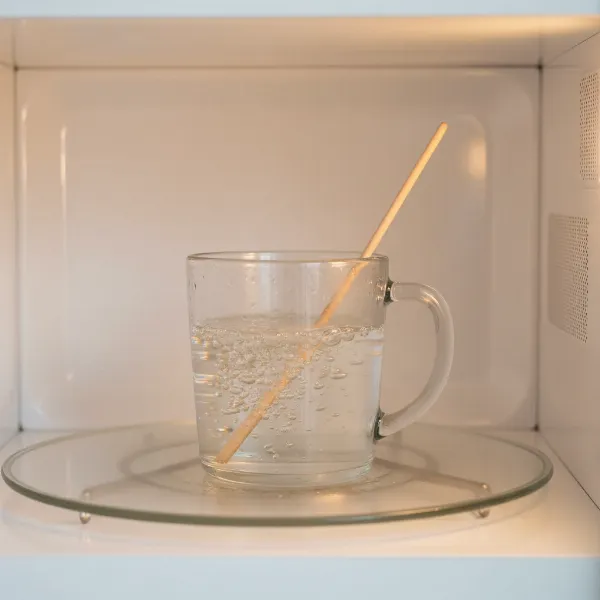 A glass mug in a microwave with a wooden stir stick inside, showing safe water boiling with bubbles.
Heat in Short Intervals
Instead of setting a long cooking time, heat the water in short bursts. For most microwaves, 1-2 minute intervals are ideal. This approach allows you to monitor the water’s temperature and bubbling more closely. If you don’t see any bubbles forming after a minute or two, it’s a strong indicator that the water might be superheating.
Stir Carefully Between Intervals
Periodically stirring the water between heating intervals helps distribute the heat more evenly and can release any nascent steam bubbles before they become dangerous. If you do stir, do so gently and deliberately. This minor disturbance can sometimes be enough to initiate boiling if the water is on the verge of superheating, but it’s best done when the microwave cycle is paused.
Allow to Rest After Heating
Once the microwave has finished, do not immediately remove the container. Let the cup stand in the microwave for at least 30 seconds to allow any potential superheated water to cool slightly and for any trapped steam bubbles to settle. This brief resting period can be a critical buffer against sudden eruptions. Some suggest allowing the water to cool completely before removing, especially if you are unsure if superheating has occurred.
Proper Water Volume and Temperature
Fill your container only halfway to prevent overflow if the water does boil vigorously. Starting with cold tap water is also recommended. While it might take a little longer to heat, cold water is less likely to superheat than water that has already been warmed.
What to Do If Superheating Happens (and How to Avoid It Entirely)
If, despite precautions, superheated water erupts and causes a burn, immediate action is vital. Cool the burn under cold, running water for several minutes and seek medical attention if the burn is severe or blistering. However, the best approach is always prevention. By consistently applying the safety tips above, you can drastically reduce the chances of encountering superheated water. For complete peace of mind, consider using an electric kettle or boiling water on a stovetop, as these methods naturally facilitate bubble formation and eliminate the risk of superheating.
Conclusion: Prioritizing Safety When Microwaving Liquids
The convenience of a microwave oven for quickly heating water is undeniable, but it comes with a unique and potentially dangerous risk: superheating. Understanding that water can become dangerously hot without appearing to boil is the first step toward safety. By choosing the right container, always adding a non-metallic bubble breaker, heating in short intervals, and allowing for a brief resting period, you can effectively mitigate this hazard. Prioritizing these simple yet crucial safety measures ensures that your microwave remains a helpful kitchen appliance rather than a source of unexpected burns. Always remember, a moment of caution can prevent a lifetime of regret when dealing with superheated liquids. Do you feel confident enough to safely boil water in your microwave now?
Frequently Asked Questions
Can I really boil water in a microwave safely?
Yes, you can safely boil water in a microwave, but it requires specific precautions to prevent superheating. Always use a microwave-safe container, add a non-metallic object to provide nucleation sites, and heat in short intervals.
What kind of mug is best to prevent superheating?
Glass or ceramic mugs are best. Avoid new, perfectly smooth mugs if possible, as older ones with slight imperfections can offer better nucleation sites. Never use metal containers in a microwave.
How long should I microwave water to boil it safely?
Heat water in short bursts, typically 1 to 2 minutes at a time. It’s crucial to monitor the water for bubbling and avoid prolonged heating, which increases the risk of superheating.
What are nucleation sites?
Nucleation sites are tiny imperfections, scratches, or trapped air pockets on a surface where bubbles can easily form when a liquid reaches its boiling point. In smooth containers, these sites are absent, leading to superheating.
Is it okay to use a metal spoon to prevent superheating?
No, never use a metal spoon or any other metal object in a microwave oven, as it can cause dangerous sparks, arcing, and potentially damage the appliance. Always opt for non-metallic bubble breakers like a wooden stick or a plastic spoon.
What does superheated water look like?
Superheated water appears perfectly still and calm, with no visible bubbles, even though its temperature is above the normal boiling point. It looks just like cold water, making it deceptively dangerous.