Mornings are often a race against the clock, leaving little time for a nutritious breakfast. If you’ve ever wished for a quick, delicious, and easy way to enjoy scrambled eggs without the fuss of a frying pan, then making them in a microwave cup is your ultimate breakfast hack. This method not only saves time but also minimizes cleanup, making it perfect for busy individuals, students, or anyone seeking a convenient protein-packed start to their day. This comprehensive guide will walk you through everything you need to know, from basic ingredients to advanced tips and flavorful variations, ensuring you create fluffy, perfectly cooked microwave scrambled eggs every time.
What Are Microwave Scrambled Eggs?
Microwave scrambled eggs are exactly what they sound like: eggs cooked and scrambled directly in a microwave-safe cup or mug. This cooking method leverages the efficiency of your microwave to produce a hot, satisfying meal in minutes, eliminating the need for stovetop cooking, extra oil, and tedious pan scrubbing. The principle is simple: rapid heating causes the egg proteins to coagulate, creating light and fluffy curds when stirred correctly. It’s a game-changer for anyone looking to simplify their morning routine without compromising on taste or quality.
Essential Ingredients for Microwave Scrambled Eggs
Creating delicious microwave scrambled eggs starts with a few basic ingredients you likely already have on hand. The beauty of this recipe lies in its simplicity and versatility.
- Eggs: Typically, two large eggs are ideal for a single serving in a standard mug. Adjust the quantity based on your appetite and mug size.
- Milk or Cream (Optional): A splash (1-2 tablespoons) of milk, cream, or even water can make your scrambled eggs lighter and fluffier. While not strictly necessary, it enhances the texture, making them less dense.
- Salt and Pepper: Essential for seasoning. A pinch of each added before cooking brings out the best flavor in your eggs.
- Non-stick Cooking Spray or Oil: Crucial for preventing the eggs from sticking to your cup and ensuring easy cleanup. A light coating goes a long way.
Step-by-Step Guide: How to Make Perfect Scrambled Eggs in a Microwave Cup
Achieving perfectly cooked, fluffy scrambled eggs in the microwave is easier than you think. Follow these simple steps for a quick and satisfying meal.
1. Preparation: Greasing Your Cup
|
Our Picks for the Best Microwave oven in 2026
As an Amazon Associate I earn from qualifying purchases.
|
||
| Num | Product | Action |
|---|---|---|
| 1 | COMFEE' Retro Small Microwave Oven With Compact Size, 9 Preset Menus, Position-Memory Turntable, Mute Function, Countertop Microwave For Small Spaces, 0.7 Cu Ft/700W, Green, AM720C2RA-G |

|
| 2 | GASLAND 30 Inch Over-the-Range Microwave Oven, 1.7 Cu.Ft Over Stove Microwave, 1000W with 10 Power Levels, Sensor & One-Touch Cooking, 300 CFM Venting, LED Cooktop Light, Black Kitchen Microwave |
|
| 3 | COMFEE' EM720CPL-PMB Countertop Microwave Oven with Sound On/Off, ECO Mode and Easy One-Touch Buttons, 0.7cu.ft, 700W, Black |
|
| 4 | COMFEE' Retro Small Microwave Oven With Compact Size, 9 Preset Menus, Position-Memory Turntable, Mute Function, Countertop, Perfect For Small Spaces, 0.7 Cu Ft/700W, Red, AM720C2RA-R |
|
| 5 | BLACK+DECKER EM720CB7 Digital Microwave Oven with Turntable Push-Button Door, Child Safety Lock, 700W, Stainless Steel, 0.7 Cu.ft |
|
| 6 | TOSHIBA EM131A5C-BS Countertop Microwave Ovens 1.2 Cu Ft, 12.4" Removable Turntable Smart Humidity Sensor 12 Auto Menus Mute Function ECO Mode Easy Clean Interior Black Color 1000W |
|
| 7 | TOSHIBA EM131A5C-SS Countertop Microwave Ovens 1.2 Cu Ft with 12.4" Removable Turntable Smart Humidity Sensor, 12 Auto Menus Mute Function ECO Mode Easy Clean Interior, 1000W, Silver |
|
| 8 | COMFEE' Retro Small Microwave Oven With Compact Size, 9 Preset Menus, Position-Memory Turntable, Mute Function, Countertop Perfect For Spaces, 0.7 Cu Ft/700W, Cream, AM720C2RA-A |
|
| 9 | COMFEE CMO-C20M1WH Retro Microwave with 11 power levels, Fast Multi-stage Cooking, Turntable Reset Function Kitchen Timer, Speedy Cooking, Weight/Time Defrost, Memory function, Children Lock, 700W |
|
| 10 | Chefman Countertop Microwave Oven 0.7 Cu. Ft., 700 Watts with 10 Power Levels, 6 Cooking Presets with One-Touch Express Cook, Eco Mode, Child Safety Lock, & Mute Button - Black |
|
Start by choosing a microwave-safe cup, mug, or ramekin. Round shapes tend to cook more evenly in the microwave. Lightly coat the inside of your chosen vessel with non-stick cooking spray or a small amount of oil. This step is vital for preventing sticking and making cleanup a breeze.
2. Whisking Your Eggs
Crack two large eggs directly into the prepared cup. Add your optional milk or cream, a pinch of salt, and a dash of pepper. Using a fork, vigorously whisk the mixture until the yolks and whites are fully combined and slightly frothy. Proper whisking ensures a uniform texture and prevents distinct pockets of yolk or white.
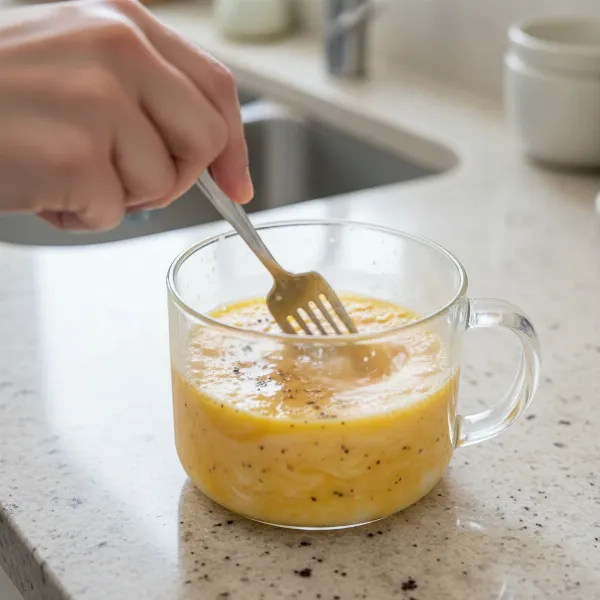 Close-up of hands whisking eggs with milk, salt, pepper in a microwave-safe cup with a fork.
3. Initial Microwave Cook
Place your cup in the microwave. For most microwaves (around 1000 watts), start by cooking on high for 30-45 seconds. Microwaves vary, so it’s always best to start with shorter intervals. During this initial cook, the eggs will begin to set around the edges.
4. Stirring and Finishing
Carefully remove the cup from the microwave (it may be hot!). Using your fork, stir the partially cooked eggs vigorously, breaking up any large curds and bringing the uncooked egg from the center to the outside. This crucial step promotes even cooking and prevents rubberiness.
Return the cup to the microwave and cook for another 30-45 seconds on high. Repeat the stirring process. If your eggs still look wet, microwave in 15-second increments, stirring after each, until they reach your desired consistency. The eggs should look slightly moist; they will continue to cook as they rest.
5. Resting Time
Once cooked, remove the eggs from the microwave. Cover the cup (you can use a small plate or plastic wrap with a vent) and let them stand for 30 seconds to 1 minute. This resting period allows residual heat to finish cooking the eggs gently, resulting in a creamier, more consistent texture. Fluff with a fork before serving.
Tips for Fluffy, Never-Rubbery Microwave Scrambled Eggs
While microwave scrambled eggs are convenient, they can quickly become rubbery if not cooked properly. Here are expert tips to ensure your eggs are always light and fluffy:
- Don’t Overcook: This is the golden rule. Eggs cook rapidly in the microwave, and overcooking is the primary cause of a rubbery texture. Always err on the side of undercooking slightly, as they will finish cooking during the resting period.
- Stir Frequently: Stirring every 30-45 seconds ensures even heat distribution and breaks up large curds, leading to a softer, more consistent scramble.
- Adjust Power Settings: If your microwave is particularly powerful, consider cooking on a medium-high (70%) power setting for slightly longer intervals. This gentler heat can prevent rapid overcooking.
- Choose the Right Container: A microwave-safe mug or ramekin with a round shape is ideal. The rounded edges help the microwave energy distribute more uniformly.
- Add a Splash of Liquid: Milk, cream, or even water not only adds moisture but also helps to create a fluffier texture.
- Salt Early: Some experts suggest adding a pinch of salt to the bottom of the dish before the egg, as salt attracts microwave energy for more even cooking.
Flavorful Variations and Add-Ins
The beauty of microwave scrambled eggs lies in their adaptability. You can easily customize them with your favorite ingredients to create a personalized, gourmet-level breakfast in minutes.
- Cheesy Delight: Stir in a tablespoon or two of shredded cheddar, mozzarella, or Monterey Jack cheese during the last minute of cooking or immediately after. The residual heat will melt it into gooey perfection.
- Savory Meats: For a heartier meal, incorporate pre-cooked and crumbled sausage, diced ham, or crispy bacon bits. Add these when you first stir the eggs after the initial microwave burst.
- Vibrant Vegetables: Boost nutrition and flavor with finely diced vegetables. Think bell peppers, onions, spinach, mushrooms, or cherry tomatoes. Sautéing tougher vegetables like onions and peppers lightly beforehand ensures they are tender in the eggs.
- Fresh Herbs & Spices: Elevate your eggs with a sprinkle of fresh chives, parsley, or a dash of paprika, garlic powder, or your favorite hot sauce for an extra kick. Add these with your initial seasoning.
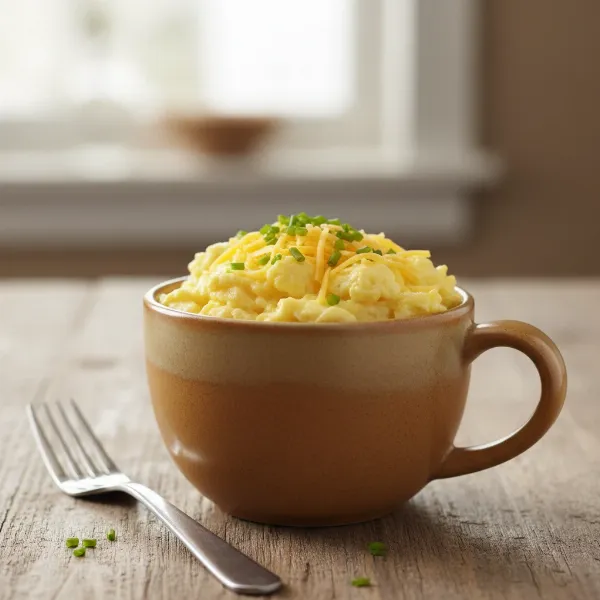 Fluffy microwave scrambled eggs in a mug, garnished with melted cheese and fresh chives, ready to eat.
“Microwave scrambled eggs are a testament to efficient cooking. The key is understanding your microwave’s power and mastering the art of intermittent stirring to achieve that coveted fluffy texture without the fuss.” – Sarah Chen, Culinary Instructor and Quick Meal Enthusiast
Common Mistakes to Avoid
Even with simple recipes, common pitfalls can lead to less-than-perfect results. Here’s what to watch out for:
- Overcooking: As mentioned, this is the biggest culprit for rubbery, dry eggs. Stick to shorter cooking intervals and rely on the resting time.
- Not Greasing the Cup: This makes cleanup a nightmare and can cause your eggs to stick stubbornly to the sides.
- Skipping the Stirring: Without stirring, eggs will cook unevenly, with some parts becoming tough while others remain raw.
- Ignoring Microwave Wattage: Cooking times are approximate. A higher wattage microwave will cook faster, while a lower wattage one will take longer. Adjust accordingly.
- Using Metal Containers: This is a fundamental microwave safety rule – never use metal in the microwave. Always ensure your cup or mug is clearly labeled as microwave-safe.
Conclusion: Choosing Your Best Microwave Scrambled Eggs
Making scrambled eggs in a microwave cup is a culinary revelation for anyone prioritizing speed, convenience, and minimal cleanup. By following a few simple steps—greasing your cup, whisking your ingredients thoroughly, cooking in short bursts with frequent stirring, and allowing for a brief resting period—you can consistently achieve fluffy, delicious results. Experiment with various add-ins to personalize your breakfast and unlock a world of quick, satisfying meals. Embrace this easy method and transform your busy mornings into opportunities for a delightful, protein-packed start.
What’s your favorite secret ingredient for microwave scrambled eggs?
Frequently Asked Questions
Can you microwave an egg to scramble it?
Yes, absolutely! Microwaving eggs to scramble them is a highly efficient and popular method for a quick breakfast. It involves whisking eggs in a microwave-safe cup and cooking them in short intervals, stirring in between, to create light and fluffy curds.
Do you need milk for scrambled eggs?
No, milk isn’t strictly necessary for scrambled eggs. You can make delicious scrambled eggs with just eggs and seasoning. However, adding one to two tablespoons of milk, cream, or even water can contribute to a creamier and fluffier texture, which many people prefer.
How long does it take to microwave eggs?
Typically, two large eggs scrambled in a microwave cup take about 1 minute and 30 seconds to 2 minutes total on high power, with stirring in between intervals. This time can vary based on your microwave’s wattage and your desired consistency. Always start with shorter times and add more as needed.
How to make cheesy scrambled eggs in the microwave?
To make cheesy scrambled eggs, whisk your eggs and seasonings as usual. After the initial microwave interval and stir, mix in a tablespoon or two of your favorite shredded cheese (like cheddar or mozzarella). Continue cooking and stirring until the eggs are cooked and the cheese is melted and gooey.
What are the common mistakes when microwaving eggs?
The most common mistakes when microwaving eggs include overcooking them (which leads to a rubbery texture), not greasing the microwave-safe cup, and failing to stir the eggs multiple times during the cooking process. Additionally, not accounting for your microwave’s specific wattage can lead to under or overcooked results.