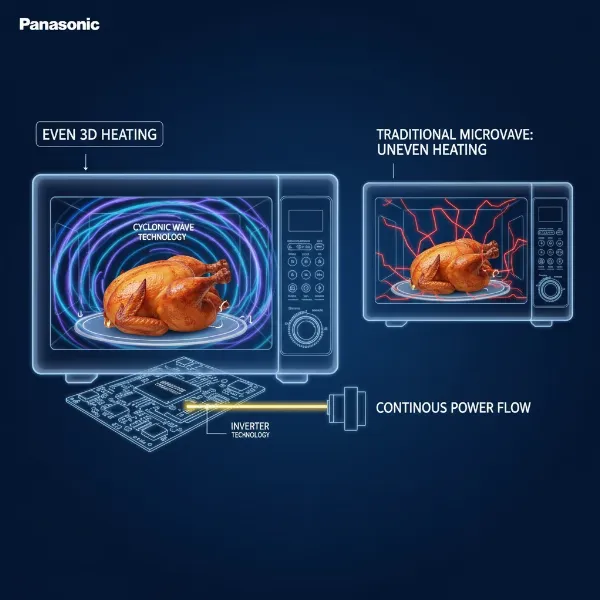
Imagine a kitchen where every meal is cooked to perfection, evenly heated, and bursting with flavor, all with unprecedented speed and efficiency. For decades, the microwave oven has been a staple in homes and commercial kitchens, revolutionizing how we heat and prepare food. Yet, the familiar “ping” often comes with the frustration of unevenly cooked meals, hot spots, and cold centers. What if the very core technology behind microwaves was due for a monumental upgrade, promising to redefine our culinary experience? Enter solid-state microwave ovens, a groundbreaking innovation poised to transform the future of cooking.
What Are Solid-State Microwave Ovens?
To understand the revolution, it’s essential to first grasp the traditional technology. For nearly 80 years, conventional microwave ovens have relied on a device called a magnetron—a vacuum tube that generates microwave energy at a fixed frequency. While effective, this method often results in inconsistent heating patterns within the oven cavity, leading to the infamous hot and cold spots.
Solid-state microwave ovens, however, usher in a new era. They replace the bulky magnetron with advanced solid-state radio frequency (RF) transistors or amplifiers. These semiconductor-based components, often utilizing materials like gallium nitride (GaN) and silicon carbide (SiC), generate microwave energy with unparalleled precision and control. This shift from a vacuum tube to solid-state electronics is not just an incremental improvement; it’s a fundamental reimagining of microwave technology, akin to the evolution from vacuum tube radios to modern digital devices.
How Solid-State Microwaves Work: Precision Beyond Compare
The magic of solid-state microwave ovens lies in their ability to precisely manage the RF energy they produce. Unlike a magnetron, which blasts a fixed frequency, solid-state systems offer dynamic control over three critical parameters: frequency, power, and phase.
This sophisticated control allows the oven to:
- Adjust Frequency in Real-Time: Solid-state technology can subtly alter the microwave frequency, preventing the formation of “standing waves” that cause hot spots and cold spots in traditional ovens. By continuously adjusting the frequency, the energy distribution becomes far more uniform throughout the cooking cavity.
- Direct Power with Accuracy: Multiple solid-state power amplifiers and antennas can work in concert, directing energy exactly where it’s needed. This means different sections of a meal can receive tailored energy, allowing for simultaneous cooking of diverse ingredients to their ideal states.
- Control Phase Angle: Beyond frequency and power, the phase of the RF signal can also be precisely managed. This enables the oven to further refine energy distribution, ensuring even heating across all dimensions of the food.
Furthermore, these next-generation ovens incorporate advanced sensing capabilities. They can measure the properties of the food itself—its composition, thickness, and moisture content—while it cooks. This creates a closed-loop feedback system, allowing the oven’s intelligence to adapt the microwave delivery in real-time. This level of responsiveness ensures optimal temperature control and cooking outcomes, something entirely unachievable with magnetron-based systems.
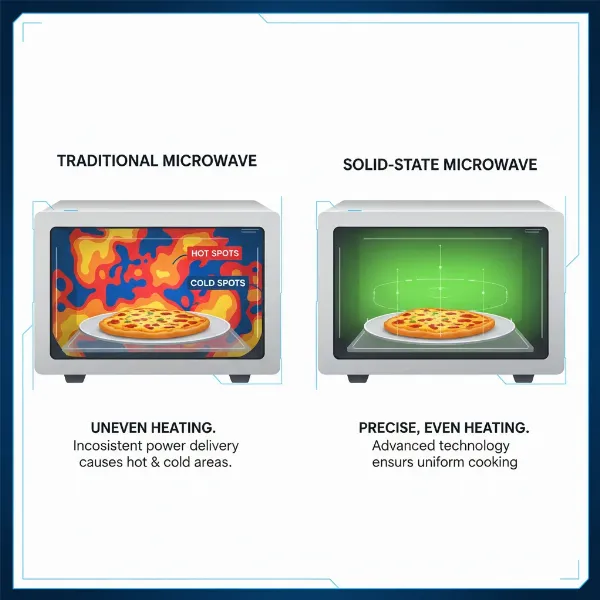 Visual comparison of traditional magnetron and solid-state microwave oven heating patterns, showing uniform heat.
The Transformative Benefits of Solid-State Technology
The precision offered by solid-state RF technology translates into a host of compelling advantages, promising to elevate the cooking experience:
- Uniform Heating and Enhanced Food Quality: The most significant benefit is the elimination of hot and cold spots. Food cooked in a solid-state oven heats consistently from edge to center, resulting in better texture, taste, and overall culinary quality. This consistency also reduces the risk of under-processing (food not cooked enough) or over-processing (food getting rubbery or dry).
- Faster, More Efficient, and Healthier Cooking: With precise energy delivery, cooking times can be significantly reduced. Solid-state generators are inherently more energy-efficient, producing microwaves only as needed and modulating power output to match exact requirements. Moreover, the ability to control temperature accurately helps retain more nutrients and moisture in food, potentially leading to healthier meals by preventing overcooking that can degrade nutritional value.
- Improved Reliability and Extended Lifespan: Magnetrons are vacuum tubes with a finite lifespan, prone to degradation over time. Solid-state components, built from robust semiconductors, boast a much longer operational life and higher reliability, reducing the need for maintenance and replacement.
- Design Flexibility and Potential for Smart Features: The compact nature of solid-state components allows for greater design freedom, potentially leading to smaller, sleeker, and even unusually shaped ovens (e.g., cylindrical). This technology also paves the way for advanced smart features, including IoT integration, AI-driven recipe suggestions, and ovens that “learn” and adapt to user preferences.
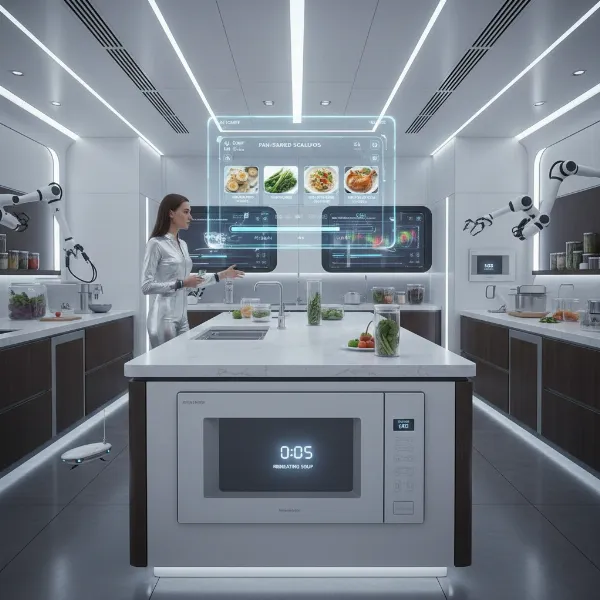 A sleek, modern kitchen with an integrated solid-state microwave oven and smart home technology.
Overcoming the Hurdles: Challenges and Current Landscape
Despite its impressive potential, solid-state microwave technology faces significant hurdles before becoming a ubiquitous presence in consumer kitchens. The primary challenge remains cost. The advanced RF power transistors required are considerably more expensive to manufacture than the mass-produced magnetron tubes found in conventional microwaves. This makes the initial price point for solid-state ovens prohibitive for many households.
Another factor is market awareness and understanding. As a relatively new technology in the consumer space, many potential users are simply unaware of solid-state microwaves or their distinct advantages. Overcoming this requires education and demonstration of their value proposition. Furthermore, as with any innovative technology entering highly regulated sectors like food processing and healthcare, there can be regulatory considerations to ensure safety and adherence to stringent quality standards.
Currently, solid-state microwave technology finds more widespread adoption in industrial and commercial cooking markets. Here, the benefits of precision, efficiency, and reliability in applications like food processing, therapeutic heating, and materials science often justify the higher investment. Companies are already leveraging these systems for demanding tasks where exact control over heating is critical.
The Road Ahead: When Will Solid-State Microwaves Be in Every Home?
The trajectory of solid-state microwaves mirrors that of many revolutionary technologies: starting in specialized industrial applications, gradually becoming more affordable, and eventually migrating to the consumer market. Experts suggest that a key milestone for consumer adoption will be when prices fall below the $1,000 mark, making them more accessible to a broader audience.
As manufacturing processes mature and economies of scale take hold, we can expect to see these advanced ovens become increasingly competitive. The integration of solid-state technology with artificial intelligence and smart kitchen ecosystems will further enhance their appeal, moving them beyond simple reheating devices to sophisticated cooking companions. Imagine an oven that not only perfectly cooks a multi-component meal but also provides nutritional insights and customizes recipes based on dietary needs.
The food industry, from restaurants to food manufacturers, is already preparing for this shift, recognizing the benefits of consistent quality and improved safety. As solid-state technology continues to evolve, it promises a future where cooking is more intuitive, efficient, and delicious than ever before.
Conclusion: The Precision Revolution in Your Kitchen
The microwave oven has come a long way since its accidental discovery, yet its core technology has remained largely unchanged. Solid-state microwave ovens represent the next major leap, moving us beyond the era of imprecise magnetrons to one of intelligent, controlled RF energy. With benefits ranging from perfectly uniform heating and enhanced food quality to superior energy efficiency and reliability, these advanced appliances hold the promise of transforming our daily cooking routines. While cost remains a current barrier, ongoing technological advancements and increasing market demand suggest that the future of cooking will undoubtedly be solid-state. Are you ready to embrace a new level of culinary precision and unlock the full potential of your kitchen?
Frequently Asked Questions
Are solid-state microwave ovens available now for home use?
|
Our Picks for the Best Microwave oven in 2026
As an Amazon Associate I earn from qualifying purchases.
|
||
| Num | Product | Action |
|---|---|---|
| 1 | COMFEE' Retro Small Microwave Oven With Compact Size, 9 Preset Menus, Position-Memory Turntable, Mute Function, Countertop Microwave For Small Spaces, 0.7 Cu Ft/700W, Green, AM720C2RA-G |

|
| 2 | COMFEE' EM720CPL-PMB Countertop Microwave Oven with Sound On/Off, ECO Mode and Easy One-Touch Buttons, 0.7cu.ft, 700W, Black |
|
| 3 | COMFEE' Retro Small Microwave Oven With Compact Size, 9 Preset Menus, Position-Memory Turntable, Mute Function, Countertop Perfect For Spaces, 0.7 Cu Ft/700W, Cream, AM720C2RA-A |
|
| 4 | GASLAND 30 Inch Over-the-Range Microwave Oven, 1.7 Cu.Ft Over Stove Microwave, 1000W with 10 Power Levels, Sensor & One-Touch Cooking, 300 CFM Venting, LED Cooktop Light, Black Kitchen Microwave |
|
| 5 | TOSHIBA EM131A5C-BS Countertop Microwave Ovens 1.2 Cu Ft, 12.4" Removable Turntable Smart Humidity Sensor 12 Auto Menus Mute Function ECO Mode Easy Clean Interior Black Color 1000W |
|
| 6 | COMFEE CMO-C20M1WH Retro Microwave with 11 power levels, Fast Multi-stage Cooking, Turntable Reset Function Kitchen Timer, Speedy Cooking, Weight/Time Defrost, Memory function, Children Lock, 700W |
|
| 7 | TOSHIBA EM131A5C-SS Countertop Microwave Ovens 1.2 Cu Ft with 12.4" Removable Turntable Smart Humidity Sensor, 12 Auto Menus Mute Function ECO Mode Easy Clean Interior, 1000W, Silver |
|
| 8 | BLACK+DECKER EM720CB7 Digital Microwave Oven with Turntable Push-Button Door, Child Safety Lock, 700W, Stainless Steel, 0.7 Cu.ft |
|
| 9 | Chefman Countertop Microwave Oven 0.7 Cu. Ft., 700 Watts with 10 Power Levels, 6 Cooking Presets with One-Touch Express Cook, Eco Mode, Child Safety Lock, & Mute Button - Black |
|
| 10 | COMFEE' Retro Small Microwave Oven With Compact Size, 9 Preset Menus, Position-Memory Turntable, Mute Function, Countertop, Perfect For Small Spaces, 0.7 Cu Ft/700W, Red, AM720C2RA-R |
|
While solid-state microwave technology is actively used in industrial and commercial settings, consumer models are still emerging and generally come at a premium price point. Widespread availability at competitive prices is expected as the technology matures and production costs decrease.
How much do solid-state microwaves cost compared to traditional ones?
Currently, solid-state microwave ovens are significantly more expensive than traditional magnetron-based models due to the higher cost of their advanced RF components. Prices are expected to decrease over time as manufacturing becomes more efficient and the technology gains wider adoption.
Are solid-state microwaves healthier for cooking?
Proponents suggest that solid-state microwaves can contribute to healthier cooking. Their precise temperature control prevents overcooking and hot spots, which can help retain more nutrients and moisture in food, leading to better overall nutritional value compared to the inconsistent heating of conventional microwaves.
What are the main differences between solid-state and traditional microwaves?
The primary difference lies in the energy source: solid-state ovens use semiconductor-based RF transistors for precise control over frequency, power, and phase, while traditional microwaves use a magnetron at a fixed frequency. This results in superior uniform heating, efficiency, and reliability for solid-state models, addressing the hot-spot issue common in conventional ovens.