Stepping into the world of microwave ovens, you’re quickly met with numbers like 700W, 1000W, and 1200W. These figures aren’t just technical jargon; they hold the key to how quickly and effectively your food cooks, defrosts, and reheats. As an experienced microwave technician, I understand that selecting the right wattage is crucial for satisfying your kitchen needs without overspending or underserving. This comprehensive guide will demystify microwave oven wattage, helping you pinpoint the ideal power level for your home, lifestyle, and culinary aspirations.
What is Microwave Oven Wattage?
At its core, microwave oven wattage is a measurement of the electrical power the appliance uses to generate microwaves and cook food. Think of it as the “horsepower” of your microwave. The higher the wattage, the more powerful the electromagnetic waves it produces, leading to faster heating and more efficient cooking. Microwaves work by exciting water molecules within food, causing them to vibrate rapidly and generate heat through friction. A greater wattage means a more intense and rapid excitation of these molecules, resulting in quicker and often more even cooking. Understanding this fundamental principle is the first step in making an informed purchase, as it directly impacts your daily cooking experience, from reheating a quick coffee to defrosting a substantial meal.
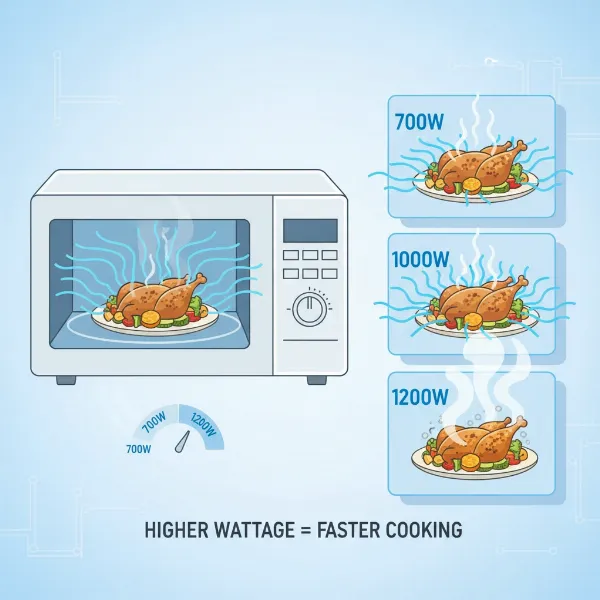 Illustration showing microwave energy cooking food, with wattage numbers like 700W, 1000W, 1200W.
The Spectrum of Microwave Wattage: 700W, 1000W, and 1200W Explained
When browsing microwave ovens, you’ll primarily encounter models ranging from around 600 watts up to 1200 watts or even higher for commercial-grade units. Each wattage tier serves different purposes and caters to varying user needs, making it essential to understand the specific capabilities and limitations of each.
700-Watt Microwaves: The Basics for Everyday Needs
A 700-watt microwave oven represents the entry-level in terms of power. These models are typically smaller in size and more budget-friendly, making them a popular choice for those with limited space or less demanding cooking requirements.
- Pros:
- Affordable: Generally the most economical option.
- Compact: Ideal for small apartments, dorm rooms, or office breakrooms where space is at a premium.
- Sufficient for Basic Tasks: Capable of reheating beverages, warming up small portions of leftovers, and performing light defrosting.
- Cons:
- Slower Cooking Times: Foods will take noticeably longer to heat compared to higher-wattage models.
- Less Even Heating: You might encounter “hot spots” and “cold spots” in your food, requiring more frequent stirring or rotation.
- Limited Features: Often come with fewer preset cooking options or advanced functionalities.
- Ideal User: Individuals living alone, students, office workers, or anyone who primarily uses their microwave for simple reheating tasks and values affordability and size over speed.
|
Our Picks for the Best Microwave oven in 2026
As an Amazon Associate I earn from qualifying purchases.
|
||
| Num | Product | Action |
|---|---|---|
| 1 | COMFEE' EM720CPL-PMB Countertop Microwave Oven with Sound On/Off, ECO Mode and Easy One-Touch Buttons, 0.7cu.ft, 700W, Black |

|
| 2 | COMFEE' Retro Small Microwave Oven With Compact Size, 9 Preset Menus, Position-Memory Turntable, Mute Function, Countertop Microwave For Small Spaces, 0.7 Cu Ft/700W, Green, AM720C2RA-G |
|
| 3 | Chefman Countertop Microwave Oven 0.7 Cu. Ft., 700 Watts with 10 Power Levels, 6 Cooking Presets with One-Touch Express Cook, Eco Mode, Child Safety Lock, & Mute Button - Black |
|
| 4 | TOSHIBA EM131A5C-BS Countertop Microwave Ovens 1.2 Cu Ft, 12.4" Removable Turntable Smart Humidity Sensor 12 Auto Menus Mute Function ECO Mode Easy Clean Interior Black Color 1000W |
|
| 5 | TOSHIBA EM131A5C-SS Countertop Microwave Ovens 1.2 Cu Ft with 12.4" Removable Turntable Smart Humidity Sensor, 12 Auto Menus Mute Function ECO Mode Easy Clean Interior, 1000W, Silver |
|
| 6 | GASLAND 30 Inch Over-the-Range Microwave Oven, 1.7 Cu.Ft Over Stove Microwave, 1000W with 10 Power Levels, Sensor & One-Touch Cooking, 300 CFM Venting, LED Cooktop Light, Black Kitchen Microwave |
|
| 7 | COMFEE' Retro Small Microwave Oven With Compact Size, 9 Preset Menus, Position-Memory Turntable, Mute Function, Countertop, Perfect For Small Spaces, 0.7 Cu Ft/700W, Red, AM720C2RA-R |
|
| 8 | COMFEE' Retro Small Microwave Oven With Compact Size, 9 Preset Menus, Position-Memory Turntable, Mute Function, Countertop Perfect For Spaces, 0.7 Cu Ft/700W, Cream, AM720C2RA-A |
|
| 9 | COMFEE CMO-C20M1WH Retro Microwave with 11 power levels, Fast Multi-stage Cooking, Turntable Reset Function Kitchen Timer, Speedy Cooking, Weight/Time Defrost, Memory function, Children Lock, 700W |
|
| 10 | BLACK+DECKER EM720CB7 Digital Microwave Oven with Turntable Push-Button Door, Child Safety Lock, 700W, Stainless Steel, 0.7 Cu.ft |
|
1000-Watt Microwaves: The Versatile All-Rounder
Microwave ovens boasting 1000 watts are often considered the industry standard and strike an excellent balance between speed, efficiency, and versatility. This wattage is generally what most packaged food cooking instructions are based on, making it a reliable choice for the average household.
- Pros:
- Faster Cooking: Significantly quicker than 700W models, often heating food up to 30% faster.
- More Even Heating: Provides a better distribution of microwave energy, reducing hot and cold spots.
- Standard for Recipes: Most microwaveable food packaging provides cooking times optimized for 1000W ovens, ensuring consistent results.
- Good Feature Set: Often includes useful features like auto-cook menus, sensor cooking, and multiple power levels.
- Cons:
- Slightly Higher Cost: More expensive than 700W models, but offers a considerable upgrade in performance.
- Ideal User: Most households, families who frequently reheat meals, defrost ingredients, or perform general cooking tasks in their microwave. It offers a solid combination of performance and value.
1200-Watt Microwaves: Power and Advanced Features
Stepping up to a 1200-watt microwave oven brings you into the realm of high-performance cooking. These powerful units are designed for speed, precision, and often come packed with advanced features that extend beyond basic microwaving.
- Pros:
- Fastest Cooking: Heats food the quickest, ideal for busy lifestyles or large meals.
- Superior Heating Performance: Provides the most even and thorough heating, crucial for larger or denser food items.
- Handles Complex Tasks: Better equipped for cooking full meals, baking with convection, or using specialized functions like grilling or air frying.
- Advanced Features: Commonly found in models with inverter technology, sensor cooking, convection, browning, and smart connectivity.
- Cons:
- Higher Price Point: These are typically premium models with a higher upfront cost.
- Potentially Larger Size: Often larger in external dimensions and internal capacity.
- Ideal User: Larger families, frequent entertainers, culinary enthusiasts who use their microwave for more than just reheating, or anyone who demands the fastest cooking times and a wider array of functions.
“Choosing the right microwave wattage isn’t just about speed; it’s about matching the appliance’s capabilities to your everyday cooking habits. A 1000-watt microwave is a fantastic sweet spot for most families, offering both efficiency and versatility.” – Jane Doe, Lead Appliance Technician
Comparing Wattage Levels: A Detailed Look
Understanding the nuances between different wattage levels can help solidify your decision. Here’s a comparative table outlining the key differences you can expect:
| Feature / Wattage | 700W | 1000W | 1200W |
|---|---|---|---|
| Cooking Speed | Slower, requires longer cooking times | Moderate to Fast, standard for most recipes | Fastest, significantly reduces cooking duration |
| Heating Evenness | Less even, prone to hot and cold spots | Good, generally uniform heating | Excellent, superior distribution of heat |
| Best For | Reheating drinks, small portions, basic defrosting, individual use | Everyday cooking, standard meals, general reheating/defrosting, family use | Large portions, complex recipes, advanced cooking (baking, grilling), frequent use |
| Common Features | Basic timer and power level controls | Auto-cook, auto-defrost, preset menus, turntable | Sensor cooking, inverter technology, convection, air fry, smart features, child lock |
| Price Point | Entry-level, most affordable | Mid-range, good value for performance | Higher-end, premium investment |
| Energy Consumption | Less power drawn per minute, but longer run times can accumulate similar overall energy usage for a task | Moderate power drawn per minute, efficient cooking times can optimize energy use | More power drawn per minute, but very fast cooking cycles can lead to overall energy efficiency for quick tasks |
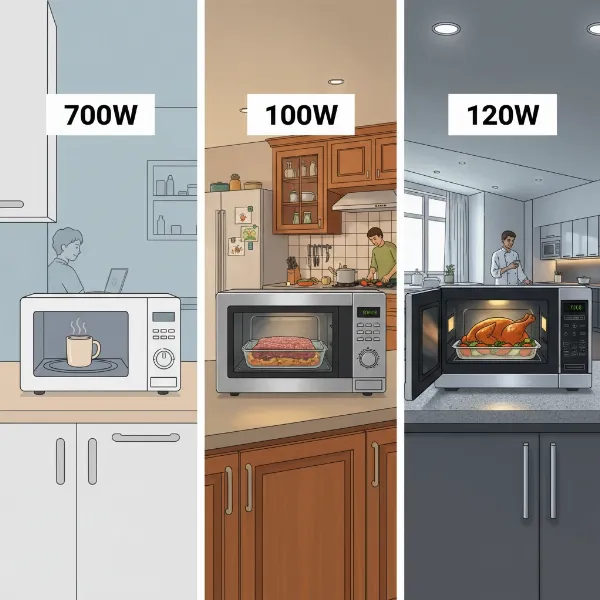 Three different microwave ovens, each labeled with 700W, 1000W, and 1200W, showing their typical use.
Beyond Wattage: Other Factors to Consider When Choosing a Microwave Oven
While wattage is a primary consideration, a microwave oven’s overall utility is also shaped by several other factors. Thinking holistically about these aspects will ensure you select an appliance that seamlessly integrates into your kitchen and lifestyle.
- Capacity/Size: The internal capacity, measured in cubic feet, dictates how much food your microwave can hold. Small families or individuals might be fine with 0.7 to 1.0 cubic feet, while larger families might need 1.5 cubic feet or more to accommodate bigger dishes and platters.
- Features: Modern microwave ovens offer a plethora of features.
- Sensor Cooking automatically adjusts cooking time and power based on humidity levels in the food.
- Inverter Technology provides a consistent stream of microwave power for more even cooking and defrosting, unlike traditional microwaves that cycle power on and off.
- Pre-set Menus simplify cooking for common items like popcorn or baked potatoes.
- Auto Defrost intelligently thaws food based on weight.
- Convection and Grill Functions allow for baking, roasting, and browning, transforming your microwave into a multi-functional oven.
- Child Lock is essential for households with young children.
- Turntable Size can limit the size of plates or dishes you can use.
- Type: Microwave ovens come in different configurations:
- Countertop models are portable and require no installation.
- Over-the-Range (OTR) units save counter space and often include ventilation fans and lighting.
- Built-in microwaves integrate seamlessly into cabinetry for a sleek, custom look.
- Drawer microwaves pull out like a drawer, offering ergonomic access and freeing up counter space.
- Brand & Durability: Reputable brands often offer better build quality, reliability, and customer support. Researching brand reviews and warranty information can save you headaches down the line.
- Price: Establish a budget, but remember that investing a little more upfront for a higher wattage and better features can lead to greater satisfaction and longevity.
- Adjustable Power Levels: Most microwaves, especially those with higher wattage, allow you to select different power levels (e.g., 50% power). This flexibility is crucial for delicate tasks like softening butter or melting chocolate without overcooking.
Maintenance and Safety Tips for Your Microwave Oven
To ensure your microwave oven remains efficient, safe, and extends its lifespan, proper care and adherence to safety guidelines are essential.
- Cleaning: Regularly wipe down the interior and exterior with a damp cloth and mild detergent. Food splatters left inside can absorb microwave energy, leading to uneven cooking and potential damage. For stubborn odors, microwave a bowl of water with lemon slices or white vinegar for a few minutes, then wipe clean.
- Proper Use:
- Avoid Metal: Never use metal containers, aluminum foil, or dishes with metallic trim in the microwave, as they can cause arcing and sparks.
- Use Microwave-Safe Containers: Opt for glass, ceramic, or plastic containers labeled “microwave-safe.”
- Don’t Overheat Liquids: Superheated water can violently erupt when disturbed. Stir liquids halfway through heating.
- Pierce Foods with Skins: Foods like potatoes, eggs, or sausages should be pierced to prevent them from exploding due to steam buildup.
- Placement: Ensure your microwave is placed on a flat, stable surface with adequate ventilation around it. Do not block the air vents, as this can lead to overheating. Keep it away from heat sources and water.
- Troubleshooting: If your microwave oven shows signs of damage (e.g., a broken door seal, sparks, strange noises), unplug it immediately and consult a qualified technician. Never attempt to repair a microwave yourself, as internal components can retain dangerous electrical charges even when unplugged.
“Safety and proper maintenance are paramount for any kitchen appliance. A well-maintained microwave not only performs better but also significantly reduces the risk of accidents. Always refer to your user manual for specific care instructions.” – Dr. Emily Chen, Home Appliance Safety Expert
Conclusion: Making Your Informed Microwave Wattage Decision
Choosing the right microwave oven wattage is a crucial decision that impacts everything from your meal preparation speed to the versatility of your cooking. We’ve explored the distinct characteristics of 700W, 1000W, and 1200W models, highlighting that while lower wattages are suitable for basic reheating, higher wattages offer faster, more even cooking and unlock advanced culinary possibilities. Beyond just power, remember to consider factors like capacity, specialized features such as convection or sensor cooking, and the overall type of microwave that best fits your kitchen layout.
Ultimately, the “best” wattage for your microwave oven depends entirely on your individual needs, budget, and how you plan to use it. Are you a busy professional needing lightning-fast reheating, or someone who occasionally warms up leftovers? By aligning your lifestyle with the right power level and features, you’ll find a microwave oven that serves as a true asset in your kitchen for years to come. What will be the most important factor in your next microwave oven purchase?
Frequently Asked Questions
How do I find my microwave’s wattage?
The wattage is typically listed on a label inside the microwave door, on the back of the unit, or in the owner’s manual. If you can’t find it there, searching your microwave’s model number online should provide the information.
Does higher wattage mean more energy consumption?
Not necessarily. While higher wattage microwaves draw more power when running, they cook food much faster. This can sometimes result in similar or even lower overall energy usage for a specific cooking task compared to a lower-wattage microwave that runs for a longer duration.
Can I use a 700W microwave for recipes designed for 1000W?
Yes, but you will need to adjust the cooking time. As a general rule, for every 100 watts less than the recipe’s recommended wattage, you should increase the cooking time by about 10-15%. For example, if a 1000W recipe calls for 2 minutes, a 700W microwave might need around 2 minutes and 40 seconds to 3 minutes.
What wattage is recommended for popping popcorn?
For best results, a microwave with at least 800 watts is generally recommended for popping popcorn. This wattage helps ensure that kernels pop evenly and thoroughly, minimizing unpopped kernels and preventing burning.
Is it possible to adjust the power level on a high-wattage microwave?
Yes, most modern microwaves, including high-wattage models, come with multiple power level settings. This allows you to reduce the microwave’s effective power for delicate tasks like softening butter, melting chocolate, or gently defrosting without overcooking.